

Decimal Multiplication Worksheet Easy Overview
As a parent, I'm always on the lookout for fun and engaging ways to help my kids learn. Number worksheets for preschool are a brilliant resource for little ones, offering a simple yet effective way to practice and reinforce their counting skills. These worksheets, like the free counting worksheets for preschoolers, are a great tool for parents and teachers, providing a structured way to teach and a fun activity for kids. And hey, if you're looking for more learning resources, check out these 20 Reading Worksheets for 4th Graders too!
Fun number activities for kindergarten.
Building a Strong Foundation: Number Sense for Preschoolers
Number worksheets for preschool are an excellent tool to develop and enhance a child's understanding of numbers and their place in the world. These worksheets provide a structured and engaging way to introduce and reinforce fundamental mathematical concepts, making learning an enjoyable experience for young minds.
Preschoolers practice writing 1-10.
Beyond Counting: Exploring Number Recognition and Tracing
While counting is an essential skill, number worksheets for preschool offer a more comprehensive approach. Number identification worksheets and number tracing activities help children recognize and write numbers, fostering a deeper understanding of their visual representation and sequence. These worksheets often include fun math activities like count and match games, where kids match quantities to their corresponding numerals, reinforcing their number sense.
Ordinal numbers for kindergarten practice.
For instance, a 1 to 20 numbers worksheet pdf might feature a series of pictures with varying quantities of objects, such as apples or toys. The child's task is to count the objects and then trace or write the correct number, enhancing their fine motor skills and number recognition simultaneously.
Writing numbers: a fun printable.
People Also Ask: What Age Group Benefits from Number Worksheets?
Number worksheets for preschool are primarily designed for children aged 3 to 5, who are typically in the preschool or kindergarten stage. This age group is at a crucial developmental stage, where they are building the foundational skills for future learning. However, these worksheets can also be beneficial for slightly older children who may need extra practice or reinforcement of basic number concepts.
Number 17 worksheet for beginners.
It's important to note that every child develops at their own pace, and these worksheets can be adapted to suit individual needs. For instance, a child who is showing an early interest in numbers might benefit from more advanced worksheets, while a child who needs extra support can start with simpler activities and gradually progress.
Numbers 0-12 practice sheet.
How to Incorporate Number Worksheets into Learning: Tips for Parents and Teachers
Number worksheets for preschool can be a valuable resource for both parents and teachers. Here are some practical tips on how to make the most of these worksheets:
Match and learn numbers.
- Print and Practice: Ensure you have a good quality printer to produce clear and legible worksheets. Consider using thicker paper for a more durable and sensory experience.
- Create a Dedicated Learning Space: Set up a quiet and comfortable area for your child to work on the worksheets. This can be a small table or even a cozy corner with a cushion and a clip board.
- Make it Fun: Incorporate games and rewards to keep your child engaged. For example, after completing a worksheet, they can earn a sticker or a small treat.
- Progress Gradually: Start with simpler worksheets and gradually introduce more challenging activities as your child's skills develop. This ensures a steady progression and avoids overwhelming them.
- Incorporate Real-World Examples: Connect the worksheets to everyday life. For instance, while doing a shapes worksheets for preschool, point out different shapes in the child's environment, like a circular clock or a rectangular door.
Tracing numbers for kindergarten.
Engaging with Math: The Benefits of Number Worksheets
Number worksheets for preschool offer a unique opportunity for children to actively engage with mathematics. By interacting with these worksheets, children develop a deeper understanding of numbers, quantities, and their relationships. This hands-on approach to learning makes math an enjoyable and accessible subject, setting a positive tone for future mathematical exploration.
Practice tracing numbers 1-20.
Furthermore, number worksheets provide a structured yet flexible learning environment. Teachers and parents can easily adapt the worksheets to suit the child's pace and needs, ensuring a personalized learning experience. This adaptability is especially beneficial for homeschooling or tutoring scenarios, where individualized instruction is key.
Free preschool number activities.
In conclusion, number worksheets for preschool are a versatile and effective tool for fostering a strong foundation in mathematics. By offering a range of activities and progressive challenges, these worksheets cater to different learning styles and abilities, making math an exciting and achievable subject for young learners. 23 Worksheets for Fractions Decimals and Percents provide a natural progression for children who have mastered basic number concepts, offering a new set of challenges and skills to explore.
Simple 1-50 number tracing.
Numbers 0-10 worksheets.
Number sense is a crucial skill for preschoolers, and these worksheets offer a fantastic opportunity to explore and grasp mathematical concepts. With their bright colors and engaging activities, they make learning an adventure!
So, why not give these worksheets a go? Print them out, gather your little ones, and let the fun begin! It's a simple and effective way to boost their number skills. We'd love to hear how it goes, so leave a comment and share your experiences with us!
Trace and learn number seven.
Read also: 29 Fraction Simplification Worksheets
Related: 26 Printable Worksheets for Volume of Rectangular Prisms
As a parent, I know how challenging it can be to find engaging and effective resources for my child's math practice. That's why I was thrilled to discover the volume of rectangular prism worksheet. It's a simple yet powerful tool that helps kids grasp the concept of volume in a fun and interactive way. With this worksheet, my child can easily practice and improve their skills, and it even comes with answers, which is a lifesaver for busy parents like me! If you're looking for more resources, I recently came across rectangular prism practice worksheets, which are perfect for reinforcing these skills and building a strong foundation.
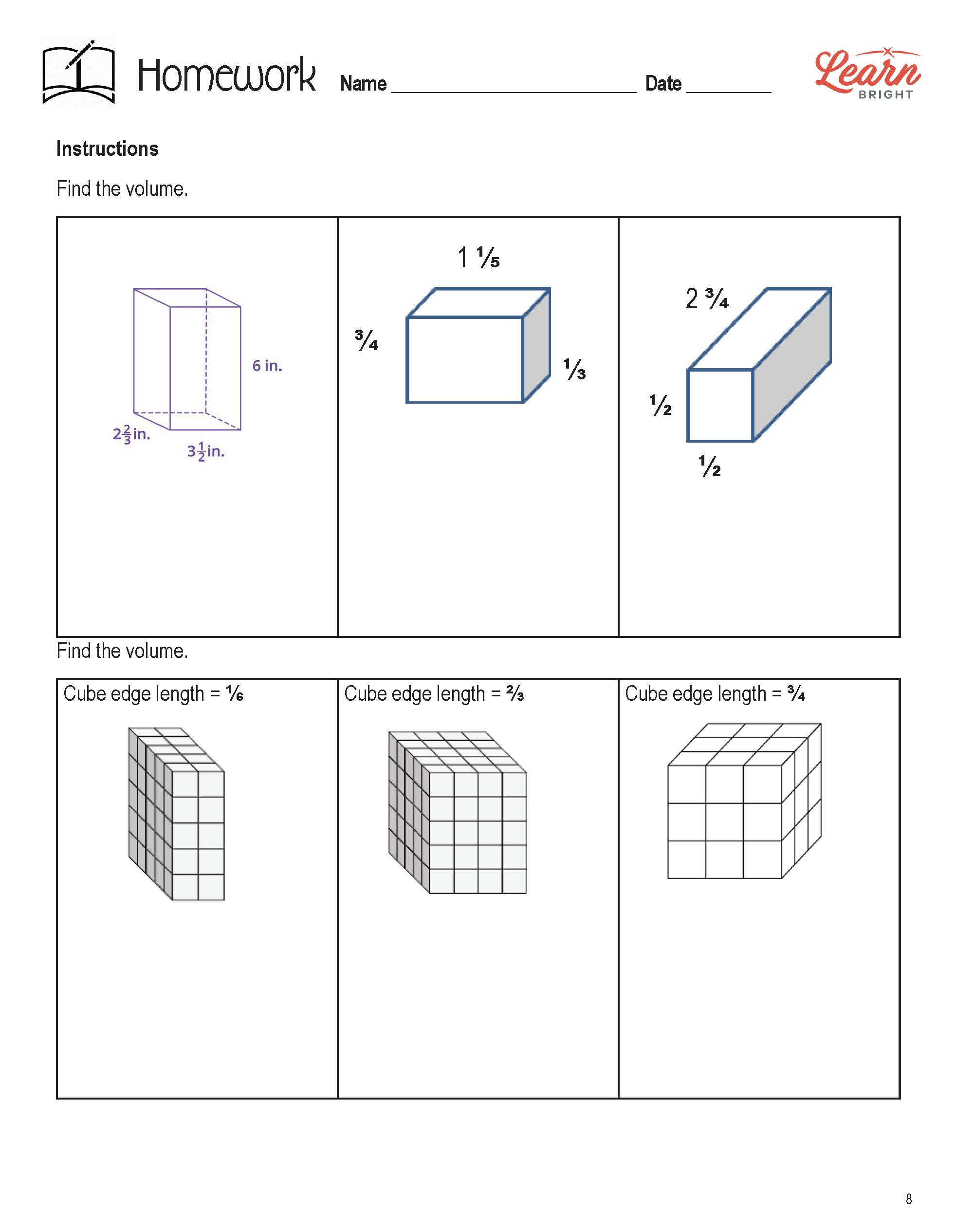
Volume of rectangular prisms practice.
Mastering Volume: A Comprehensive Guide
Advanced Practice with Rectangular Prisms
Now, let's delve deeper into the world of volume of rectangular prism worksheet and explore some advanced concepts. While the basic worksheet introduces the concept of volume, more advanced versions offer a range of challenging problems to enhance a student's understanding. These worksheets often present scenarios where students must calculate the volume of complex rectangular prisms with varying dimensions. For instance, a problem might involve finding the volume of a rectangular prism with an irregular base, testing a student's ability to apply the formula in a real-world context.
Calculating volume of rectangular prisms.
Another layer of complexity involves problems where students must determine the volume of a rectangular prism when given the surface area. This type of problem requires a deeper understanding of the relationship between volume and surface area, encouraging students to think critically and apply their knowledge in a more nuanced way.
Elegant volume of rectangular prism worksheet.
These advanced worksheets are ideal for students who have a solid grasp of the basic concepts and are ready to take their learning to the next level. They provide an excellent opportunity for students to reinforce their understanding and develop their problem-solving skills, preparing them for more complex mathematical challenges in the future.
Rectangular prism volume worksheets.
People Also Ask: What's the Best Way to Introduce Volume to Young Learners?
Introducing the concept of volume to young learners can be a fun and engaging process. It's important to start with simple, relatable examples to build a solid foundation. One effective strategy is to use everyday objects like boxes, books, or even toy building blocks to demonstrate the concept of volume. By physically manipulating these objects and counting the number of blocks or cubes they contain, students can begin to understand the idea of volume as a measure of the space an object occupies.
Volume practice for grade 5.
Another great way to introduce volume is through visual aids and diagrams. Simple drawings or models of rectangular prisms can help students visualize the concept and understand how length, width, and height combine to create volume. This visual approach can be especially beneficial for visual learners and can make the abstract concept of volume more tangible and understandable.
Volume of rectangular prisms and cubes.
How to Choose and Use the Right Volume Worksheet
When selecting a volume of rectangular prism worksheet, it's important to consider the learner's age, grade level, and prior knowledge. For younger students or those new to the concept, it's best to start with simple worksheets that focus on basic calculations and provide clear, step-by-step instructions. These worksheets might include visual aids or diagrams to help students understand the relationship between length, width, and height.
Surface area and volume of prisms.
As students progress and gain a better understanding of volume, more advanced worksheets can be introduced. These worksheets might include word problems or real-world scenarios, challenging students to apply their knowledge in practical situations. It's also beneficial to choose worksheets with a variety of question types, such as multiple-choice, short answer, or open-ended problems, to keep students engaged and cater to different learning styles.
Volume of prisms with fractions.
When using the worksheets, it's important to provide clear instructions and guidance. For younger students, it may be helpful to work through the first few problems together, explaining the steps and encouraging students to ask questions. As students become more confident, they can work independently, but regular review and feedback are essential to ensure they're understanding the concepts correctly.
Volume of various 3D shapes.
Real-World Applications: Bringing Volume to Life
One of the most exciting aspects of learning about volume is its real-world applications. From architecture and engineering to packaging and logistics, understanding volume is a crucial skill in many fields. By exploring these real-world connections, students can see the practical value of their mathematical studies and develop a deeper appreciation for the subject.
Volume of rectangular prisms.
For example, students can explore how architects and engineers use volume calculations to design buildings and structures. They can learn about how volume is used to determine the capacity of rooms, the amount of material needed for construction, and even the structural integrity of a building. This real-world context can make learning about volume more engaging and meaningful, helping students see the relevance of their studies beyond the classroom.
Volume and area of prisms with decimals.
Building a Strong Foundation: The Power of Practice
Regular practice is key to mastering any mathematical concept, and volume is no exception. The more students engage with volume of rectangular prism worksheet and similar resources, the more comfortable and confident they will become with the concept. Consistent practice helps students internalize the formula, understand the relationship between length, width, and height, and develop the skills needed to solve more complex problems.
Volume of prisms and cylinders.
In addition to worksheets, there are many other ways to reinforce volume skills. For example, students can practice measuring and calculating the volume of objects in their everyday environment, such as their bedroom, a box of toys, or a container of food. They can also explore online games and interactive activities that focus on volume, providing a fun and engaging way to practice and apply their knowledge.
By combining volume of rectangular prism worksheet with real-world applications, hands-on activities, and regular practice, students can build a strong foundation in volume that will serve them well in their mathematical journey and beyond.
Well, there you have it! The volume of rectangular prisms is a fascinating concept, and these worksheets are a great way to explore it further. Advanced problems can really test your understanding and push your mathematical skills.
So, go ahead and give these worksheets a go! Print them out, work through the problems, and don't be afraid to challenge yourself. It's a fun way to enhance your math skills. Feel free to leave a comment below and share your experiences with these worksheets; we'd love to hear how you've tackled these mathematical adventures!
Free volume of prism worksheet.
Read also: Capitulo 2 Primer Paso Worksheet Answers Explained
Related: 23 Reading Worksheets for Kindergarten
As a parent, I'm always on the lookout for fun and engaging ways to help my little ones learn. Reading worksheets for kindergarten can be a real lifesaver when it comes to keeping kids interested and focused. These printable resources are a great tool for parents and teachers alike, offering a simple way to practice reading skills at home or in the classroom. I recently discovered some free printable reading comprehension worksheets for kindergarten, and they've been a hit with my kids! It's a fun way to get them excited about learning, and it's even better when you can find creative themes, like 31 Cat Pumpkin Carving Stencil Designs, to keep them engaged.
Free reading comprehension for kindergartners
Reading Fluency and Comprehension: A Foundational Focus
One of the key benefits of reading worksheets for kindergarten is their ability to enhance reading fluency and comprehension skills in young learners. These worksheets provide a structured and engaging way for children to practice reading, helping them develop a solid foundation for future academic success. By working through various activities and exercises, kids can improve their reading speed, accuracy, and understanding of text, which are essential skills for any subject they'll encounter in school.
Learning reading skills with a fun worksheet
Beyond Basic Reading: Building Vocabulary and Critical Thinking
While reading fluency is a crucial aspect, reading worksheets for kindergarten also offer opportunities to expand vocabulary and foster critical thinking. Many worksheets incorporate activities like identifying words, matching pictures to words, or unscrambling letters to form words. These exercises not only reinforce letter recognition and word formation but also encourage children to think creatively and analytically. By engaging in these activities, kids can develop a richer vocabulary and improve their ability to comprehend and interpret text, which are vital skills for effective communication and problem-solving.
First grade reading adventure
People Also Ask: What Specific Skills Do These Worksheets Target?
Kindergarten worksheets often cover a range of reading-related skills, catering to different learning needs and styles. For instance, some worksheets focus on letter recognition and phonics, helping kids identify and associate letters with their corresponding sounds. Others may emphasize sight word recognition, where children learn to recognize and read common words quickly and accurately. Additionally, worksheets can target vocabulary building, sentence structure, and even early writing skills, such as forming letters and simple sentences. The variety of activities ensures that kids can practice different aspects of reading and language development, catering to their individual learning progress.
Reading comprehension for kindergarteners
How to Choose and Use Reading Worksheets Effectively
When selecting and utilizing reading worksheets for kindergarten, it's essential to consider the specific needs and abilities of your child or students. Start with simpler worksheets that align with their current reading level, gradually introducing more challenging activities as they progress. It's also beneficial to offer a mix of worksheet types, such as those focusing on phonics, sight words, or vocabulary, to provide a well-rounded reading practice experience. Additionally, consider the format and presentation of the worksheets. Some kids may respond better to colorful and visually appealing worksheets, while others might prefer a more straightforward and simple design. Experiment with different styles to find what works best for your learners.
Fun games for reading comprehension
Practical Application: Incorporating Worksheets into Daily Learning
Reading worksheets can be seamlessly integrated into various learning environments, including classrooms, homeschooling settings, and even as supplementary practice at home. In a classroom setting, teachers can use worksheets as a tool for whole-class instruction, small group activities, or individual practice. They provide a structured way to reinforce reading concepts and allow teachers to assess student understanding. For homeschooling parents or tutors, worksheets offer a convenient and effective way to guide and support children's reading development, providing a clear framework for practice and progress tracking. At home, parents can use worksheets as a fun and interactive way to engage their kids in reading, especially during dedicated learning time or as a break from regular play. By incorporating worksheets into daily routines, parents and educators can ensure consistent practice and support children's reading growth in a structured yet enjoyable manner.
Reading journey for kindergarteners
As an added bonus, worksheets can also be a great way to keep kids entertained during travel or downtime. With a simple printout and some coloring tools, children can practice their reading skills on the go, making learning a portable and accessible activity. This flexibility ensures that learning opportunities are always within reach, fostering a love for reading and continuous progress.
Free reading comprehension sheets
Worksheets for reading adventures
Learning to read with printables
Reading comprehension for early readers
Beginning reading practice
Free printable reading adventures
Reading worksheets offer a fantastic opportunity to nurture your child's love for learning and set them up for a bright future. With these engaging resources, you can help your little ones build a strong reading foundation, which is an invaluable gift.
So, why not give it a go? Print out a few worksheets, make it a fun activity, and see the magic unfold. It's a simple yet powerful way to support your child's reading journey. Leave a comment or share your experience below; we'd love to hear how it goes!
Comprehension practice sheets for kids
Read also: 21 Disney Pumpkin Stencil Ideas