



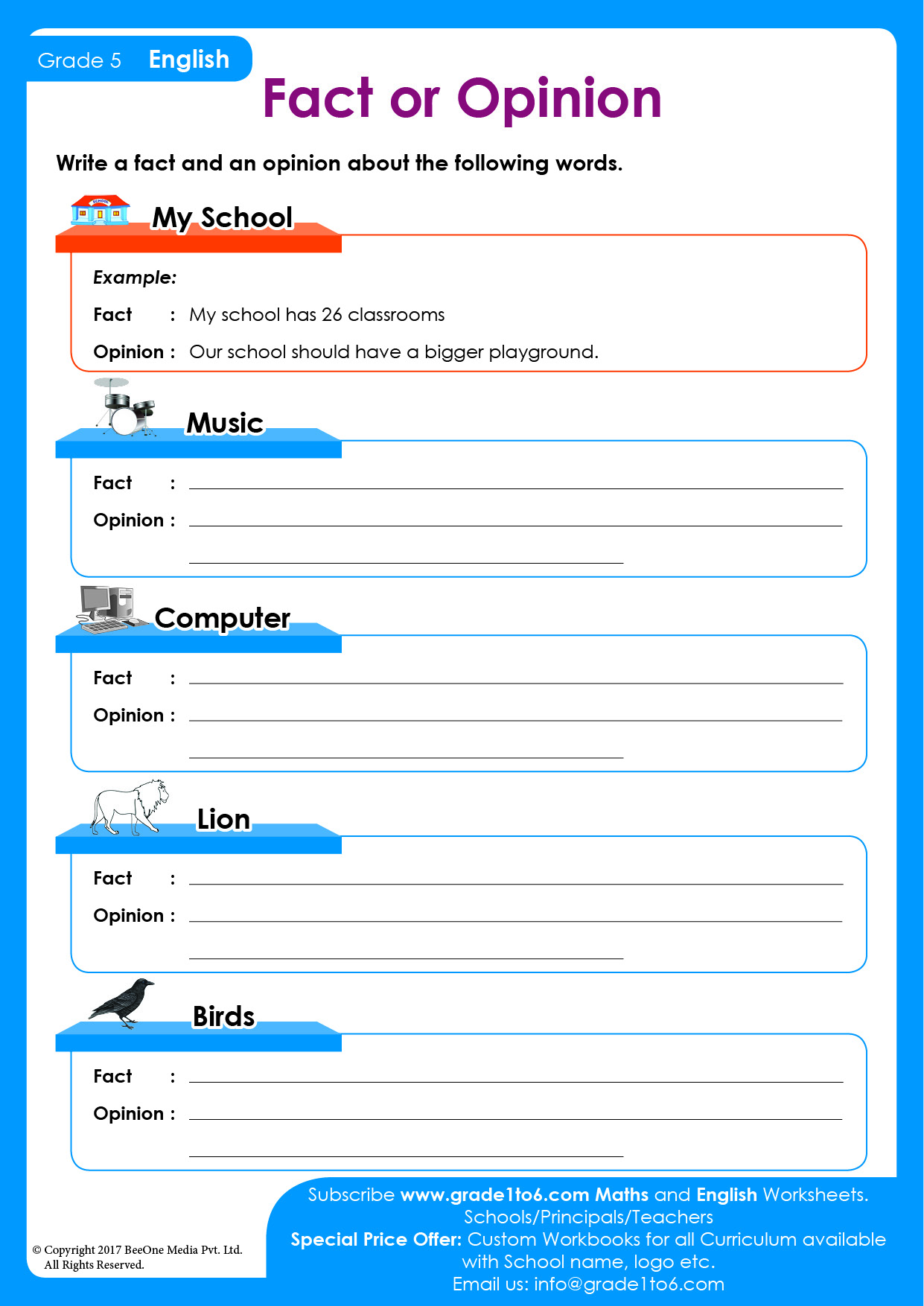


Facts and Opinions: Distinguishing Truth from Perception
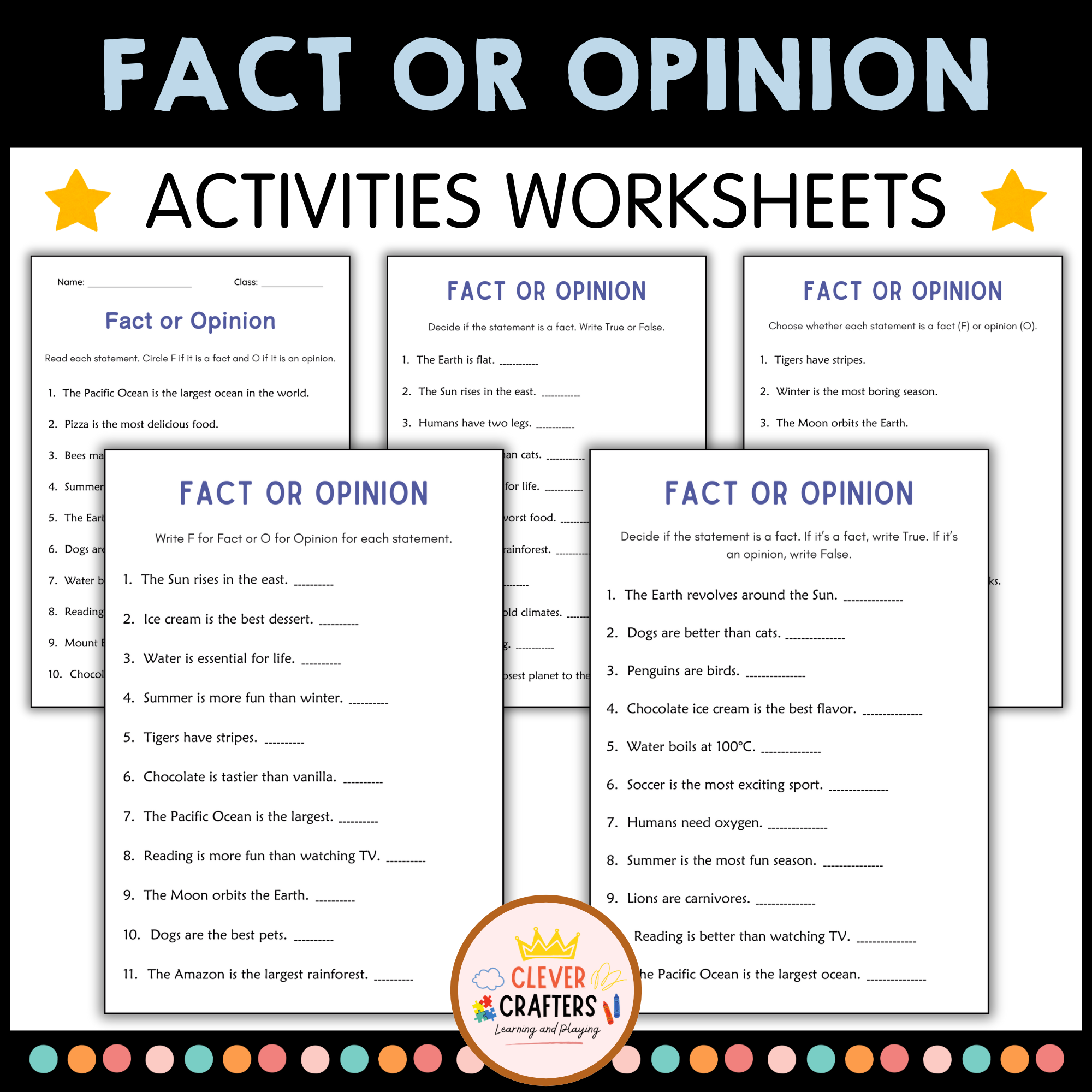
Teaching children the difference between facts and opinions is a fundamental skill that lays the foundation for critical thinking and media literacy. While it may seem straightforward to adults, kids often need guidance to understand the nuances between objective statements and subjective viewpoints. That's where fact vs opinion worksheets come into play, offering an engaging and interactive way to practice this essential skill.
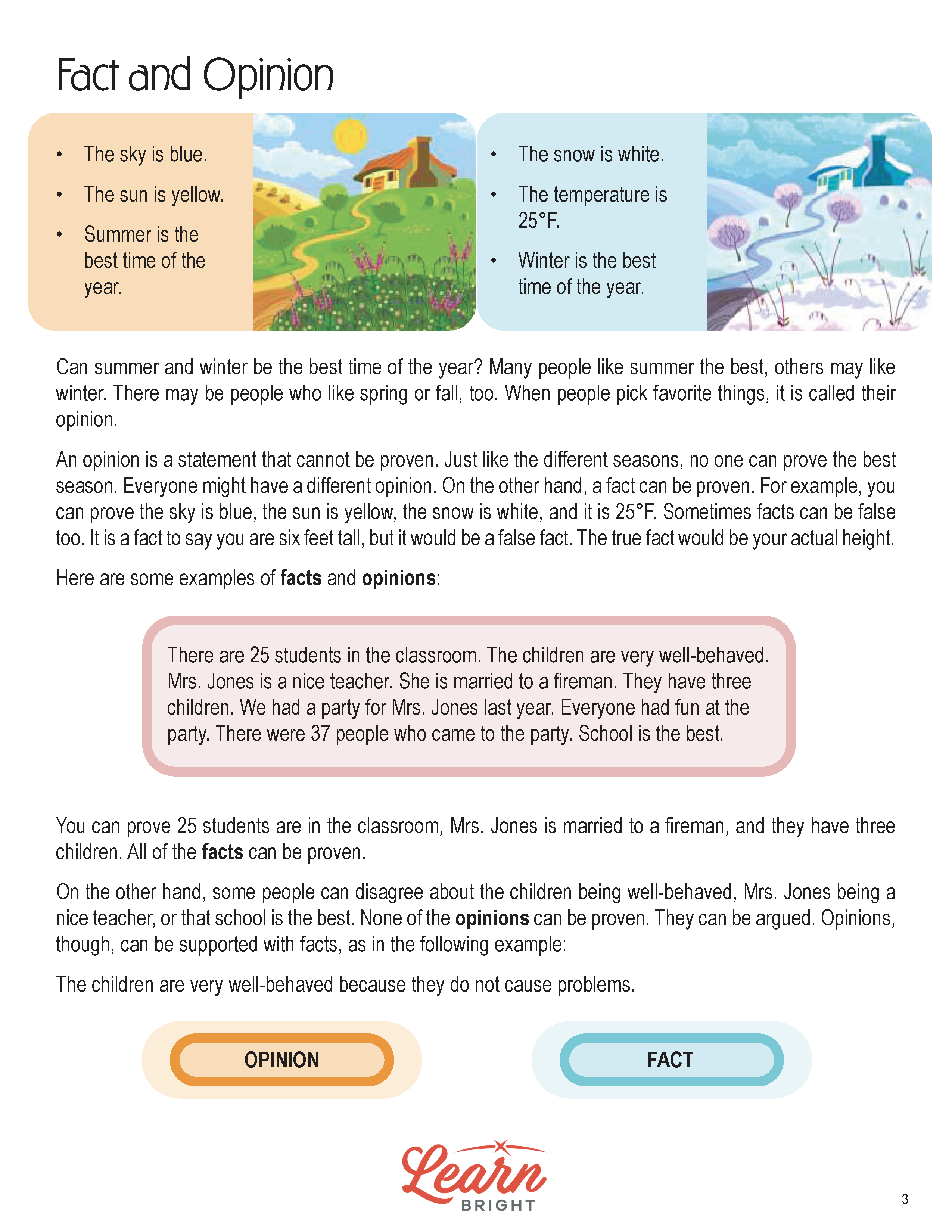
Lesson on Fact and Opinion
Beyond Black and White: Exploring Shades of Gray
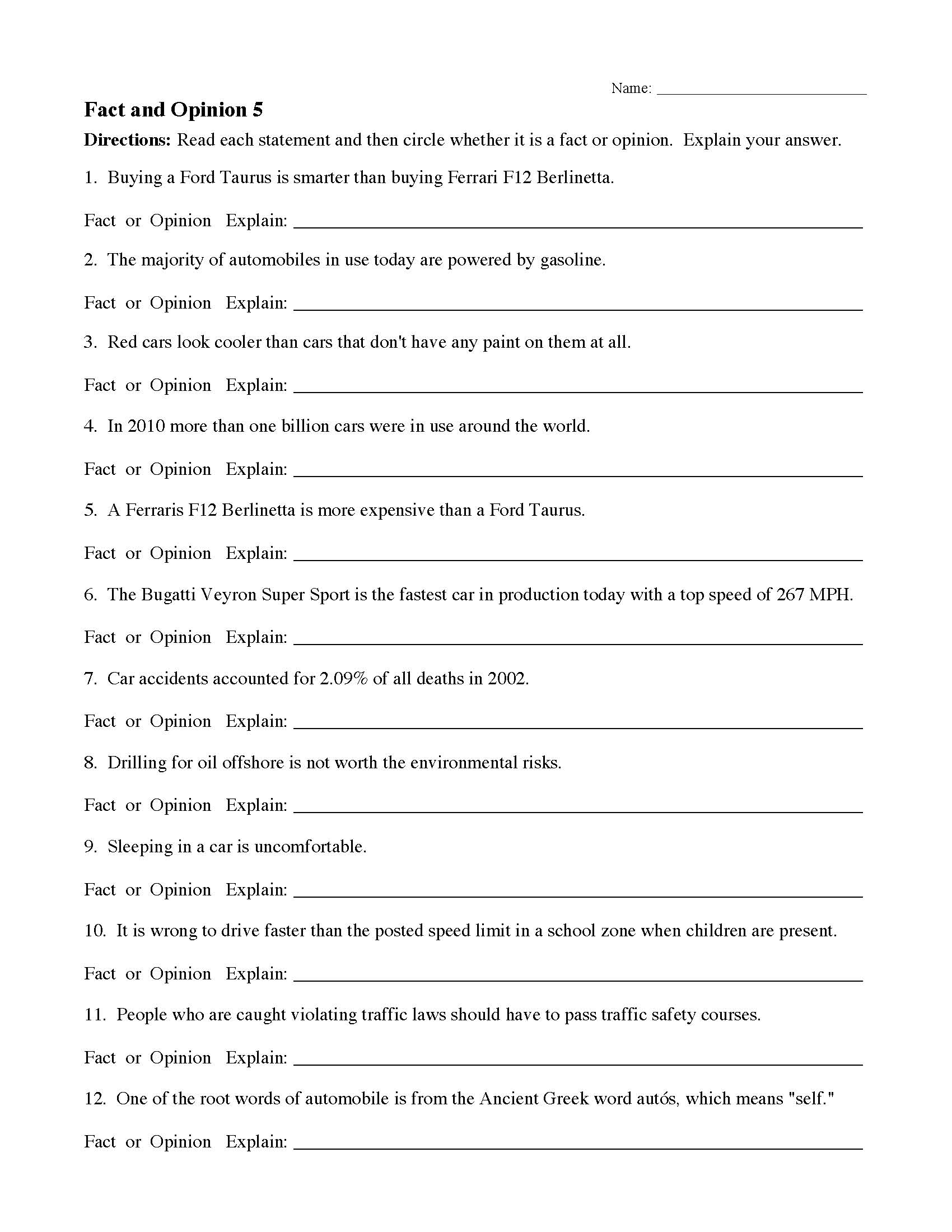
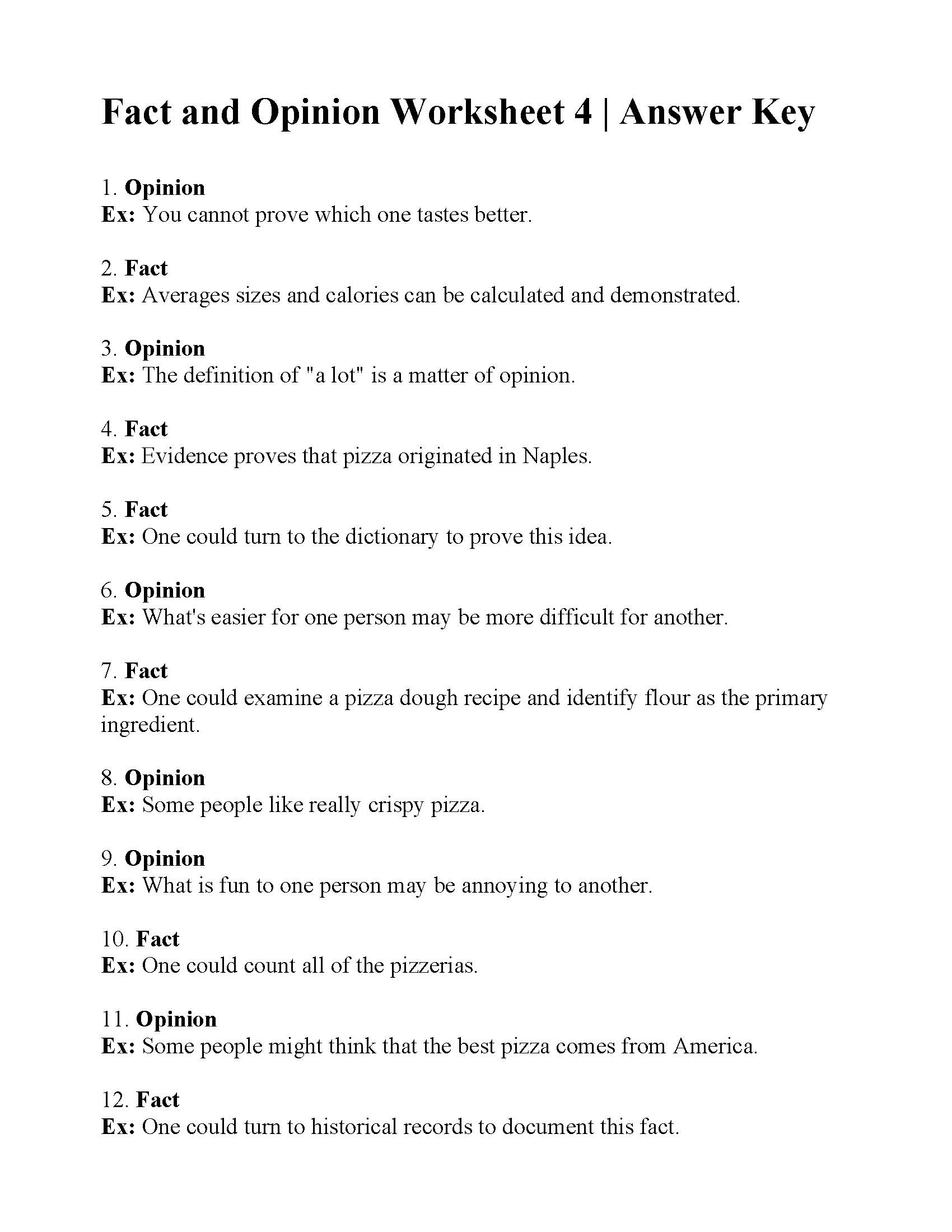
Fact vs opinion worksheets go beyond simple true or false statements, encouraging learners to think critically about the world around them. These worksheets present a range of statements, from clear-cut facts to more nuanced opinions, challenging students to analyze and categorize them accordingly. By encountering different types of statements, learners develop a deeper understanding of the complex relationship between data or judgment, reality or view, and knowledge or belief.
Identifying Facts and Opinions
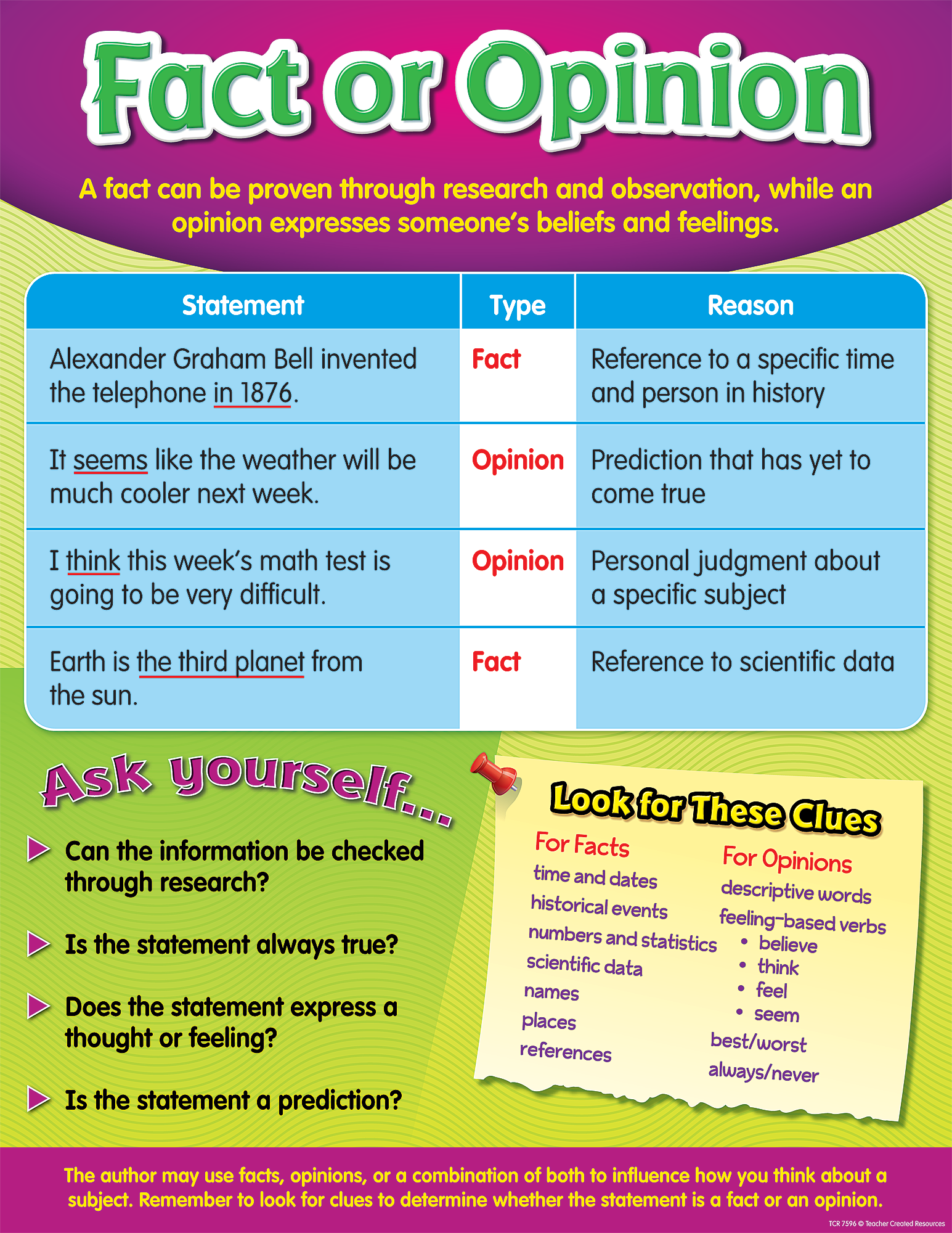
For instance, a statement like "The sky is blue" is a straightforward fact, easily verifiable by observation or scientific data. On the other hand, a statement like "Blue is the best color" expresses a personal preference or opinion, based on individual taste and subjective experience. Fact vs opinion worksheets help students distinguish between these two categories, fostering an awareness of the distinction between verifiable and subjective statements.
Duck-Themed Fact vs. Opinion
People Also Ask: What's the Purpose of Fact vs Opinion Worksheets?
Fact vs opinion worksheets serve a crucial purpose in education, helping students develop essential skills for navigating the information-rich world we live in. By practicing with these worksheets, learners strengthen their ability to discern between evidence and inference, empirical facts and personal opinions. This skill becomes increasingly important as they encounter a vast array of information sources, from textbooks and news articles to social media posts and online forums.
Fact vs. Opinion Writing Activity
By engaging with fact vs opinion worksheets, students learn to approach information with a critical eye, questioning the validity and reliability of statements they encounter. This skill not only enhances their understanding of the world but also empowers them to make informed decisions and form well-reasoned arguments based on factual evidence.
Reading Comprehension: Fact or Opinion
How to Make the Most of Fact vs Opinion Worksheets: Practical Tips
When using fact vs opinion worksheets, it's essential to create a supportive learning environment that encourages open dialogue and critical thinking. Here are some practical tips to make the most of these worksheets:
Sports-Themed Fact and Opinion
- Encourage Discussion: After completing the worksheet, facilitate a class discussion or group activity where students can share their thoughts and reasoning. This promotes active engagement and allows learners to hear different perspectives, fostering a deeper understanding of the topic.
High School Activities: Fact or Opinion
- Provide Context: Present real-life examples or scenarios that illustrate the distinction between facts and opinions. For instance, discuss a news article or a social media post, analyzing the statements and identifying whether they are based on factual evidence or personal beliefs.
Fact vs. Opinion: QWFNTW
- Gradual Progression: Start with simpler statements and gradually increase the complexity as students become more proficient. This approach ensures a smooth learning curve, allowing learners to build confidence and develop their critical thinking skills step by step.
Advanced Fact or Opinion Worksheet
- Incorporate Variety: Use a range of worksheet activities, including multiple-choice questions, short answer responses, and open-ended discussions. This variety keeps students engaged and allows them to practice different skills, from analyzing statements to expressing their own opinions and justifying their choices.
Fact or Opinion: Admuscente
Fact vs Opinion Worksheets in Action: Real-World Applications
Fact vs opinion worksheets can be effectively used in various educational settings, including classrooms, homeschooling environments, and tutoring sessions. Here's how these worksheets can be incorporated into different learning scenarios:
Writing Practice: Fact vs. Opinion
Classroom Practice: Teachers can use fact vs opinion worksheets as a warm-up activity or as part of a larger lesson on critical thinking. By working through the worksheets together, students can benefit from peer interaction and the teacher's guidance, fostering a collaborative learning environment.
Homeschooling: Homeschooling parents can incorporate fact vs opinion worksheets into their curriculum, providing a structured yet engaging way to teach critical thinking skills. These worksheets can be used as standalone activities or integrated into a broader unit on media literacy or persuasive writing.
Tutoring Sessions: Tutors can utilize fact vs opinion worksheets to reinforce critical thinking skills and enhance students' ability to analyze and evaluate information. By working through the worksheets, students can develop a deeper understanding of the topic and improve their overall academic performance.
Learning at Home: Fact vs opinion worksheets are an excellent resource for parents looking to support their child's learning at home. These worksheets can be printed and completed independently or used as a starting point for family discussions, encouraging critical thinking and open dialogue.
When using fact vs opinion worksheets, it's essential to consider the learner's age and grade level. While these worksheets can be adapted for various age groups, it's crucial to ensure the content is age-appropriate and aligns with the learner's developmental stage. By selecting worksheets that match the learner's level, educators and parents can create a supportive and engaging learning experience.
In conclusion, fact vs opinion worksheets offer a practical and engaging way to teach children the distinction between facts and opinions. By exploring the complex relationship between truth or perception, these worksheets empower learners to become critical thinkers and discerning consumers of information. Whether used in classrooms, homeschooling environments, or as a learning resource at home, fact vs opinion worksheets provide a valuable tool for fostering essential skills in today's information-rich world.