



Geometry Worksheets Grade 4 Overview
Sometimes, finding the right resources to help your child or student grasp a tricky math concept can be a challenge. Perimeter of irregular shapes worksheets can be a lifesaver for parents, teachers, and homeschoolers alike! These worksheets provide a practical way to reinforce the skill of calculating the perimeter of irregular shapes, a skill that can sometimes be tricky to master. With 17 Free Printable Tracing Worksheets, you can easily access a variety of perimeter with missing sides worksheets to cater to different learning needs.
Perimeter practice for 3rd graders.
Calculating Perimeter: A Fundamental Math Skill
Mastering the concept of perimeter is an essential building block in a student's mathematical journey. Perimeter of irregular shapes worksheets offer a structured approach to help students understand and apply this skill, which is often a stepping stone to more complex geometric concepts. These worksheets provide a practical, hands-on way to reinforce the calculation of perimeters, especially for irregular shapes that may not have uniform sides.
Calculate irregular shapes' perimeters.
Mastering Irregular Shapes: A Step Beyond Basics
While many students first encounter perimeter by calculating the lengths of the sides of regular shapes like squares or rectangles, perimeter of irregular shapes worksheets take this a step further. These worksheets present more complex shapes with varying sides, challenging students to apply their understanding of perimeter to less familiar forms. By working through these worksheets, students develop a deeper understanding of geometric concepts and learn to apply their mathematical skills to real-world scenarios.
Circle area and perimeter drill.
How Do These Worksheets Help?
Perimeter of irregular shapes worksheets offer a structured way to practice finding the perimeter of various shapes. They typically present a shape with its dimensions, often with some missing side lengths, and students are required to calculate the total distance around the shape. These worksheets may also include equations or word problems, encouraging students to solve for the missing side lengths and then calculate the perimeter.
Find missing side lengths to calculate perimeter.
Who Can Benefit from These Worksheets?
These worksheets are designed to cater to a wide range of learners, from those just starting to explore perimeter to those who need a refresher or more challenging practice. They can be used in various educational settings, including classrooms, tutoring sessions, and homeschooling environments. Parents and teachers can use these worksheets to reinforce geometric concepts, provide additional practice, or assess a student's understanding of perimeter.
Finding area and perimeter of irregular shapes.
How to Use and Print These Worksheets
Perimeter of irregular shapes worksheets are often available as printable PDFs, making them easy to access and use. Simply download the worksheet, print it out, and provide it to your student or child. If you're a teacher, you might consider projecting the worksheet onto a whiteboard or smartboard, allowing the entire class to work through the problems together. For homeschooling parents, these worksheets can be a valuable addition to your curriculum, providing a structured way to practice and reinforce geometric concepts.
Irregular shape perimeter calculator.
Progression and Practice: Building Confidence
Perimeter of irregular shapes worksheets often start with simpler shapes and progress to more complex ones, allowing students to build their confidence gradually. They might begin with shapes that have only one or two missing side lengths, then move on to shapes with more missing sides or shapes that require more complex calculations. This progressive approach ensures that students can master the concept of perimeter step by step, building a strong foundation for more advanced mathematical concepts.
Irregular shapes' area and perimeter.
As students work through these worksheets, they not only improve their mathematical skills but also develop critical thinking and problem-solving abilities. By engaging with these practical exercises, students learn to apply their knowledge in a real-world context, a skill that is invaluable for their academic and personal growth.
Fun activities for area and perimeter.
29 Compound Interest Worksheets offer another great resource for mathematical practice, helping students understand the concept of compound interest and its applications in finance and everyday life.
Irregular figure area and perimeter.
Perimeter of rectilinear shapes.
Identify regular and irregular polygons.
Area of irregular shapes worksheet.
Perimeter skills are a fun and crucial part of math, and these worksheets are a great tool to explore and practice. They offer an engaging way to grasp the concept and build a strong foundation.
So, why not give it a go? Print out a worksheet, gather some friends or family, and have a go at calculating perimeters together. It's a fun way to spend time and learn something new. Leave a comment or share your experience below; we'd love to hear how it goes and any tips you discover along the way!
Polygon perimeter worksheets for math monks.
Related: 28 Tracing Lines Worksheets for Early Learners
As a parent, I'm always on the lookout for fun and engaging activities to keep my little ones busy and learning. Tracing lines worksheets are a brilliant resource, especially during the holiday season when we need some extra help keeping the kids occupied. These worksheets are a lifesaver, offering a simple yet effective way to practice fine motor skills and hand-eye coordination. With Christmas worksheets, like 30 Christmas Worksheets for Preschool, you can even make learning festive and fun!
Calendar-themed line tracing for kids.
Tracing Lines: A Foundation for Fine Motor Skills
When it comes to early childhood education, tracing lines worksheets are an invaluable tool. These simple yet effective resources offer a fun and engaging way for young learners to develop their fine motor skills and hand-eye coordination. By practicing tracing lines, children can improve their pencil control, which is a crucial skill for writing and drawing.
Simple line tracing practice for kids.
Connecting the Dots: A Step Beyond Basic Tracing
While tracing lines worksheets often focus on straight or curved lines, there's a fun variation that takes it up a notch: connect the dots or join the dots activities. These worksheets introduce a new layer of challenge and excitement, as children not only trace lines but also connect specific points to reveal hidden pictures or patterns. This type of activity not only enhances fine motor skills but also stimulates their curiosity and problem-solving abilities.
Printable worksheets for line tracing.
People Also Ask: What Age is Suitable for Tracing Lines Worksheets?
A common question among parents and educators is determining the appropriate age for introducing tracing lines worksheets. The answer is quite flexible and depends on the child's individual development. Generally, these worksheets are suitable for preschoolers and kindergarteners, typically aged 3 to 6. However, even younger children who show an interest in holding a pencil or crayon can benefit from simple tracing activities. It's all about providing an enjoyable and age-appropriate learning experience.
Trace lines while learning new words.
How to Choose and Use Tracing Lines Worksheets Effectively
When selecting tracing lines worksheets, it's essential to consider the child's skill level and interests. For beginners, start with simple, straight lines or basic shapes. As they progress, introduce more complex curves, zigzags, or even letters and numbers. Variety is key to keeping their interest and challenging them appropriately.
Sleeping and standing line patterns to trace.
In terms of usage, these worksheets can be a standalone activity or incorporated into a larger learning session. They are perfect for quiet time at home, a fun break during homeschooling, or as a warm-up exercise in the classroom. Remember, the goal is to make learning enjoyable and engaging, so adapt the worksheets to your child's pace and preferences.
Standing line tracing, a fun activity.
Beyond Tracing: Exploring Shapes and Patterns
While tracing lines worksheets are excellent for developing basic skills, they can also be used to introduce more advanced concepts. For instance, tracing shapes worksheets can help children recognize and differentiate various shapes, such as circles, triangles, and squares. Additionally, free printable zigzag tracing worksheets offer a fun way to practice more intricate line patterns, preparing them for more complex writing tasks.
Engaging line tracing for 3-year-olds.
These worksheets can also be a gateway to exploring connect paths or path tracing exercises, where children follow a specific route or trace a path to reach a destination. This type of activity not only enhances their fine motor skills but also encourages spatial awareness and strategic thinking.
Tribobot's line tracing adventure.
In conclusion, tracing lines worksheets are a versatile and valuable resource for early childhood education. They provide a solid foundation for fine motor skills, hand-eye coordination, and even spatial awareness. With various types and levels of difficulty, these worksheets can cater to different ages and skill levels, making them a go-to tool for parents, teachers, and tutors alike. So, whether it's a simple line drawing practice or a more complex connect-the-dots puzzle, tracing lines worksheets offer a world of learning and fun!
Preschool line tracing, a fun start.
Mom Nessly's line tracing fun.
Horizontal line tracing, a basic skill.
Number tracing, 0-10, for kids.
Tracing lines may seem like a simple activity, but it's an essential step in a child's learning journey. It's amazing to see how these worksheets can really boost their confidence and prepare them for more complex writing tasks. So, why not give it a go? Print out a few of these worksheets, and let your little ones explore and have some fun while developing those fine motor skills. We'd love to hear about your experiences and see how your kids are enjoying these tracing adventures! Leave a comment and share your stories; we're all ears!
Complex lines for advanced tracing skills.
Related: 25 Subtraction Worksheets With Regrouping
As a parent, I'm always on the lookout for fun and effective ways to help my kids practice their math skills. Subtraction worksheets with regrouping can be a real lifesaver, especially when it comes to mastering those tricky double-digit subtraction problems. It's a great way to reinforce those foundational skills, and I've even seen some cool subtraction worksheets without regrouping that can be a fun challenge for more advanced learners.
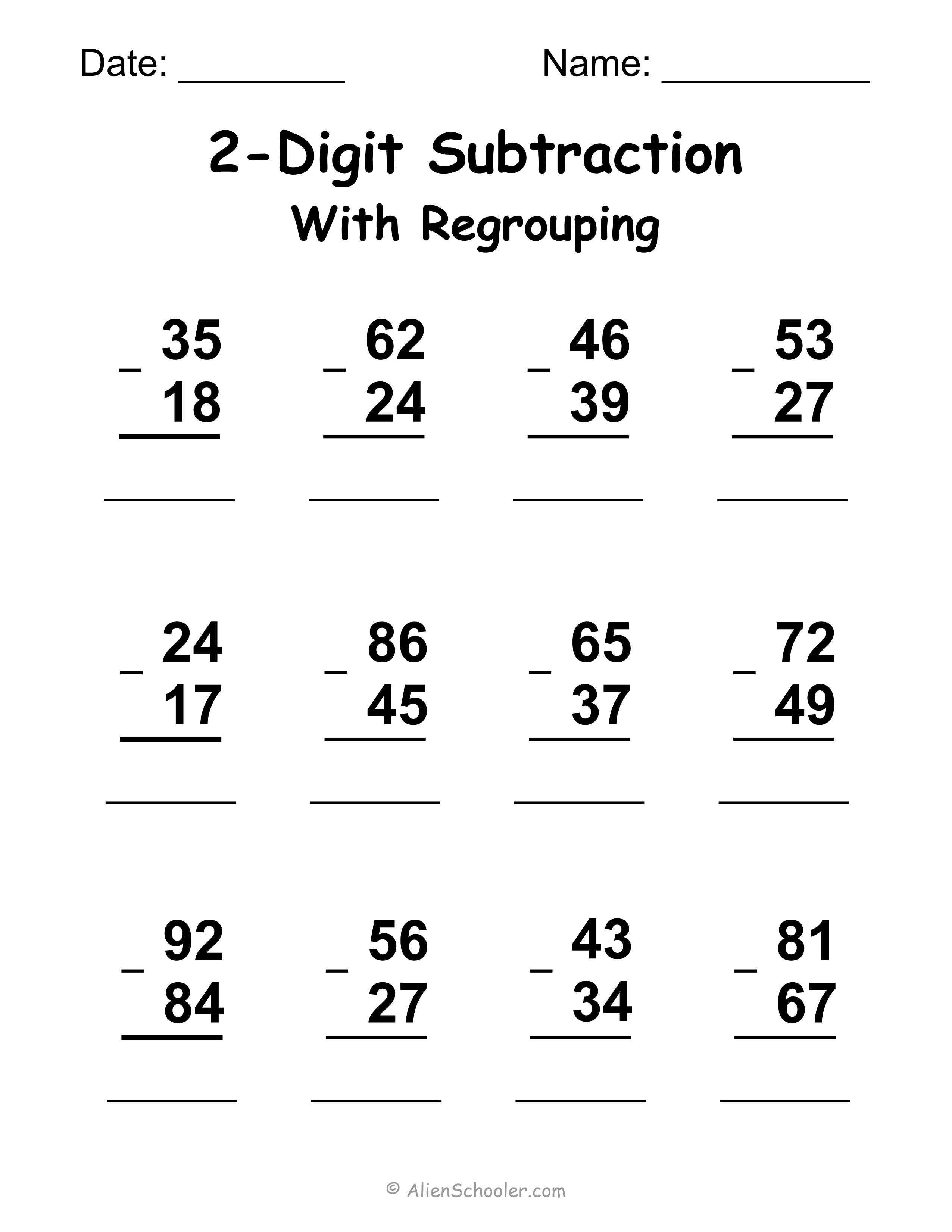
Practice subtracting two-digit numbers with regrouping.
Mastering Subtraction: The Power of Regrouping Worksheets
Beyond Basic Subtraction: Regrouping for Advanced Learners
While subtraction worksheets without regrouping are great for introducing basic subtraction concepts, it's the regrouping worksheets that take learners to the next level. These worksheets are designed to help students tackle more complex subtraction problems, especially those involving double-digit or multi-digit numbers. By introducing the concept of regrouping, or borrowing, students learn to manipulate numbers and develop a deeper understanding of place value.
Basic subtraction without regrouping for beginners.
Regrouping worksheets typically present problems where the minuend (the number being subtracted from) has a digit in the tens or hundreds place that is smaller than the digit in the same place value of the subtrahend (the number being subtracted). This scenario requires students to "borrow" from the next place value to ensure they can subtract successfully. For example, in the problem 34 - 17, the student would need to regroup or borrow 10 from the tens place to make the minuend's tens digit larger than the subtrahend's.
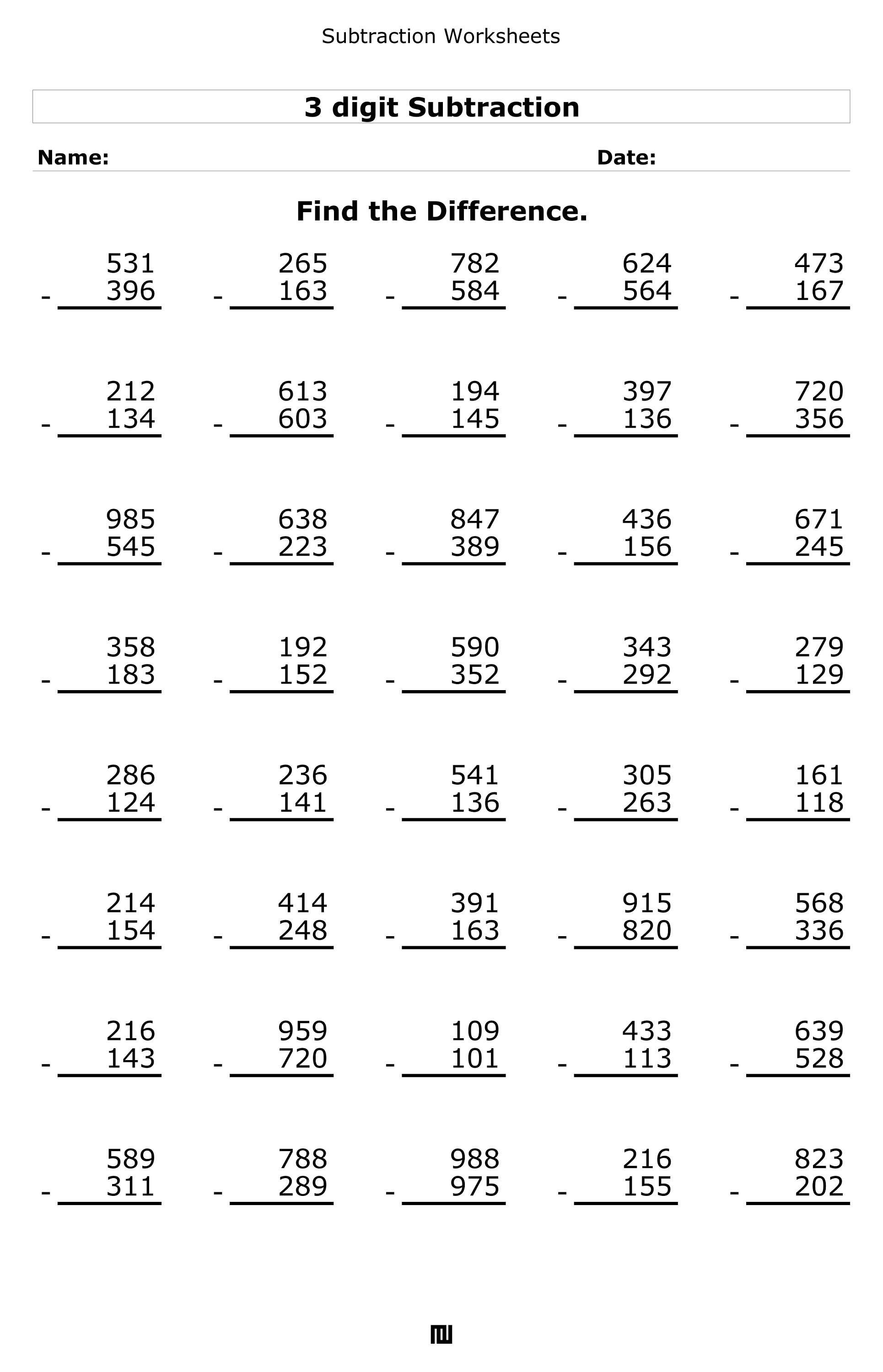
Three-digit subtraction with regrouping exercises.
These worksheets come in various formats and difficulty levels, making them suitable for a wide range of learners. Some worksheets may focus solely on two-digit subtraction with regrouping, while others might introduce three-digit or even four-digit numbers to provide a greater challenge. The beauty of regrouping worksheets is their adaptability, allowing teachers and parents to choose the level of complexity that best suits each student's needs.
Double-digit subtraction: a fun worksheet for kids.
People Also Ask: What is the Regrouping Method in Subtraction?
The regrouping method, also known as the traditional subtraction method or the column subtraction method, is a technique used to solve subtraction problems involving multi-digit numbers. It involves borrowing or regrouping from the next place value to ensure the minuend's digit is larger than the subtrahend's in each place value. This method is a fundamental skill for students to master as it forms the basis for more complex mathematical operations.
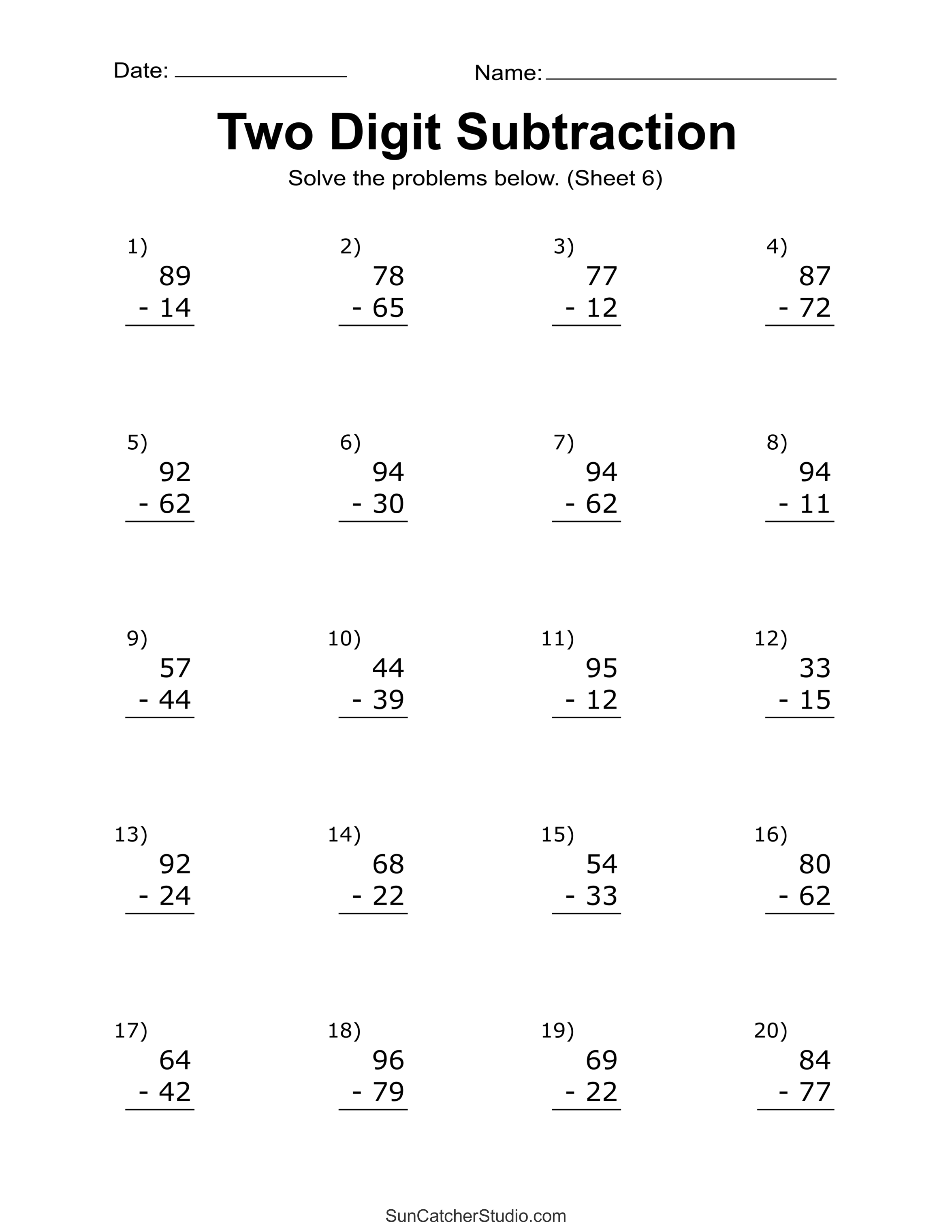
Free two-digit subtraction without regrouping practice.
To use the regrouping method, students first align the numbers vertically, ensuring the place values line up. They then subtract each place value, starting from the rightmost digit. If the minuend's digit is smaller than the subtrahend's, they borrow 1 from the next place value, increasing the minuend's digit by 10 and decreasing the next place value by 1. This process continues until all place values have been subtracted, resulting in the final answer.
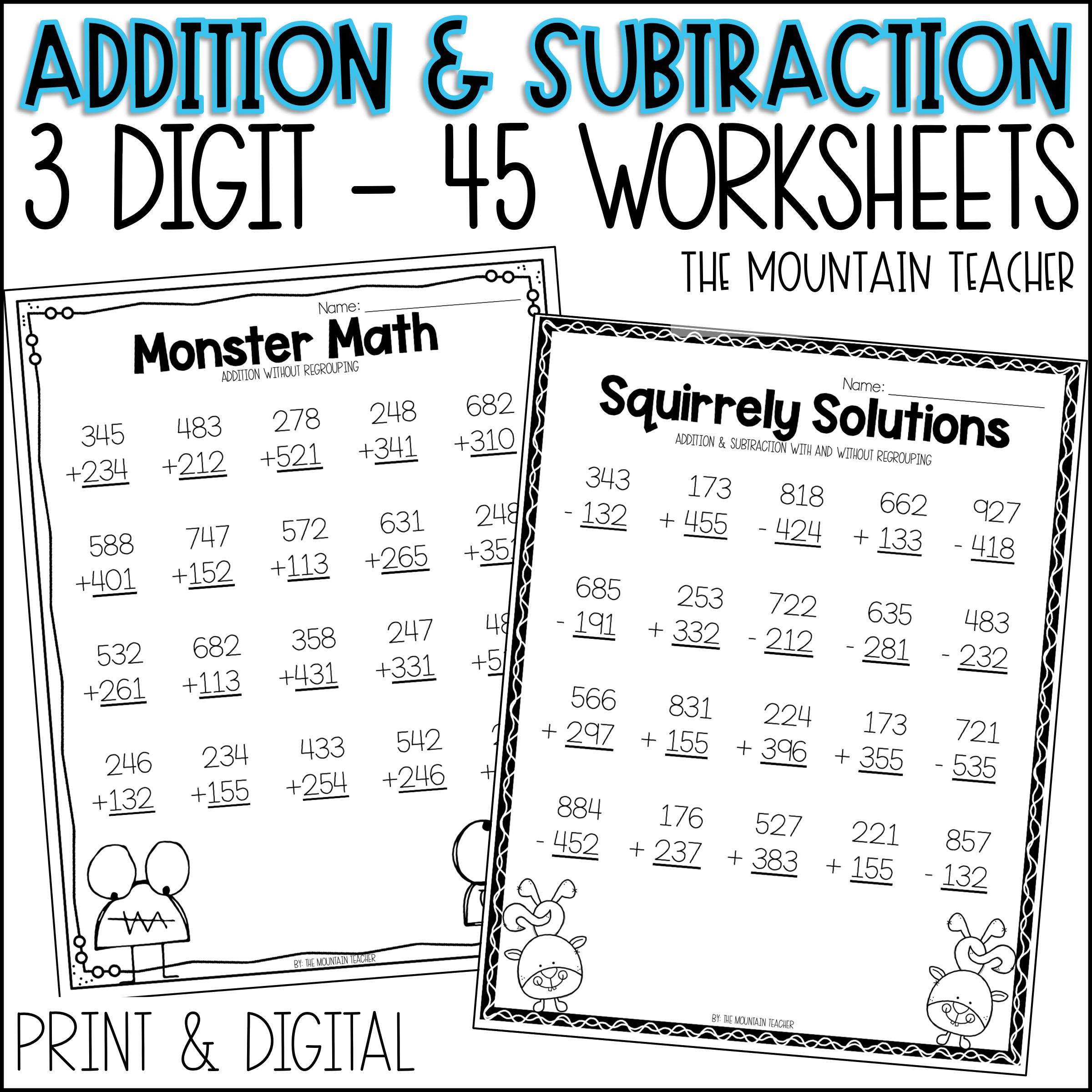
Addition and subtraction with regrouping: mixed practice.
How to Use Subtraction Worksheets with Regrouping Effectively
Subtraction worksheets with regrouping can be a powerful tool for teachers, tutors, and parents to enhance students' mathematical skills. Here are some practical tips on how to use these worksheets effectively:
Printable subtraction worksheets for all levels.
- Choose the Right Level: Select worksheets that match the student's current ability level. Start with simpler two-digit subtraction problems and gradually progress to more complex three-digit or multi-digit problems as the student becomes more confident.
- Provide Guidance: Especially for younger learners or those new to regrouping, provide step-by-step guidance. Explain the concept of regrouping and demonstrate how to borrow from the next place value. Offer visual aids or manipulatives to help students understand the process.
- Encourage Practice: Regular practice is key to mastering regrouping. Provide a variety of worksheets with different problem sets to keep students engaged. Mix up the difficulty levels to challenge students and prevent boredom.
- Offer Feedback: Review the student's work and provide constructive feedback. Identify common mistakes, such as forgetting to regroup or making simple calculation errors, and guide the student towards improvement.
- Incorporate Games: Make learning fun by incorporating subtraction games or activities that involve regrouping. This can help reinforce the concept and make it more enjoyable for students.
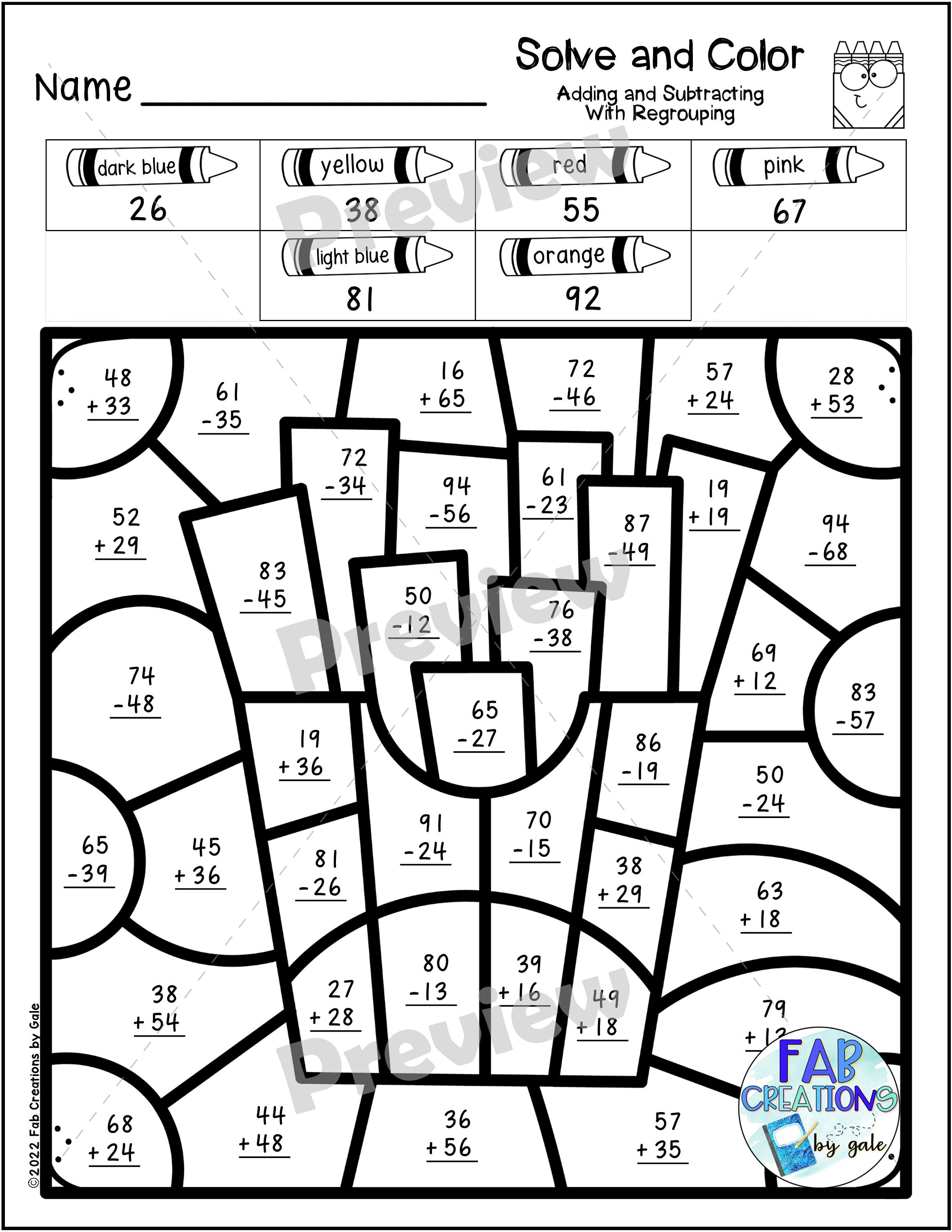
Double-digit addition and subtraction: color by code.
Enhancing Math Skills: The Benefits of Regrouping Worksheets
Subtraction worksheets with regrouping offer a wealth of benefits for students learning math. By practicing with these worksheets, students develop a strong foundation in place value, a crucial concept in mathematics. They learn to manipulate numbers with confidence, improving their mental math skills and number sense.
Free 3-digit addition and subtraction with regrouping.
Moreover, regrouping worksheets encourage critical thinking and problem-solving abilities. Students must analyze each problem, decide when and how to regroup, and apply the regrouping method accurately. This process enhances their logical reasoning and decision-making skills, which are valuable not just in math but in various aspects of life.
Subtraction with regrouping: a fun coloring page.
Regrouping worksheets also provide an opportunity for students to develop their concentration and focus. Solving multi-step problems requires sustained attention, helping students build their cognitive endurance and resilience.
Subtraction with regrouping: a set of varied worksheets.
In a classroom setting, regrouping worksheets can be used for individual practice, group work, or as a whole-class activity. They can be assigned as homework or used as a warm-up exercise to prepare students for more complex lessons. For homeschooling or tutoring, these worksheets offer a structured way to teach and reinforce subtraction skills, ensuring students progress at a steady pace.
Three-digit subtraction with regrouping: a comprehensive worksheet.
Whether used in a formal educational setting or for at-home learning, subtraction worksheets with regrouping are a versatile and effective tool to enhance students' mathematical abilities and build a strong foundation for future learning.
27 Butterfly Stencil Designs for Easy Crafts can also be a fun way to incorporate art into math learning, especially when creating visual aids or manipulatives for regrouping!
Hey there, math enthusiasts! We hope this journey into the world of subtraction worksheets has sparked some excitement. Remember, regrouping is a powerful tool that can make even the trickiest problems more manageable.
So, go ahead and give these worksheets a try. Print them out, work through them at your own pace, and see the difference they can make in your math skills. We'd love to hear how it goes for you, so feel free to leave a comment or share your experiences below. Happy learning!
Online math practice for kids: free printable worksheets.
Read also: 29 Anime Tattoo Stencil Ideas