




Interpreting Linear Graphs Worksheet Grade 4 Overview
As a parent, I'm always on the lookout for resources to support my child's learning journey, especially when it comes to math. Interpreting linear equations worksheets can be a lifesaver for any student, offering a practical way to grasp and apply this concept. These worksheets provide a structured approach, making it easier to understand and solve linear function equations.
Practice with linear graph worksheets.
Linear Equations Unveiled: Mastering the Basics
Interpreting linear equations worksheets are an excellent tool for students to gain a solid foundation in understanding and manipulating linear functions. These worksheets offer a structured and engaging approach to learning, allowing students to develop their problem-solving skills and build confidence in tackling mathematical challenges.
Color by number, multi-step equations.
Beyond Basics: Exploring Advanced Concepts
While the fundamental goal of interpreting linear equations worksheets is to provide a strong foundation, they can also be tailored to cater to more advanced learners. Advanced worksheets may introduce concepts such as graphing straight lines, where students learn to plot points and connect them to form linear equations. This skill is essential for visualizing and understanding the behavior of linear functions. Additionally, worksheets can delve into the slope-intercept form, helping students identify and calculate the slope and y-intercept of a line, a crucial skill for solving more complex equations.
Word problems with one variable.
People Also Ask: What Makes These Worksheets Effective?
One of the key advantages of interpreting linear equations worksheets is their versatility. They can be adapted to suit different learning styles and levels. For younger students, worksheets may focus on simple linear equations with clear, step-by-step instructions, gradually building their understanding. On the other hand, more advanced learners can benefit from worksheets that incorporate real-world scenarios, requiring them to apply their knowledge to practical situations. This approach not only enhances their mathematical skills but also fosters critical thinking and problem-solving abilities.
Functions and linear equations.
How to Get the Most Out of Your Worksheets
To ensure an effective learning experience, it's essential to choose the right interpreting linear equations worksheet. Consider the learner's age, grade level, and current understanding of the topic. Start with basic worksheets that introduce fundamental concepts and gradually progress to more challenging ones. For example, a beginner might start with worksheets focused on finding the x and y intercepts of a line, a skill that is foundational for solving linear equations. As they advance, worksheets can introduce more complex equations, requiring them to find gradients and apply their knowledge to different scenarios.
Writing equations, a practical guide.
Practical Applications: Bringing Learning to Life
Interpreting linear equations worksheets are not just about solving mathematical problems; they also have real-world applications. Students can apply their skills to practical situations, such as calculating distances, understanding growth rates, or even predicting trends. For instance, a worksheet might present a scenario where students need to interpret data on the population growth of a city, requiring them to use their linear equation skills to make predictions and draw conclusions. This practical approach not only reinforces their mathematical understanding but also highlights the relevance of math in everyday life.
Graphing linear equations, a visual aid.
By incorporating interpreting linear equations worksheets into their learning journey, students can develop a strong foundation in linear functions. These worksheets provide a structured and engaging way to learn, offering a range of activities and challenges suitable for various skill levels. Whether used in a classroom, for homeschooling, or as a supplement to tutoring, these worksheets are a valuable resource for any student aiming to master linear equations. With consistent practice and the right guidance, students can unlock the secrets of linear equations and apply their knowledge with confidence.
Algebraic approach to linear equations.
28 Printable Stencil Letter Designs can also be a fun way to incorporate creative elements into math learning, especially for younger students.
Linear equations, a comprehensive practice.
Solving simultaneous equations, a challenge.
Math problems for 8th graders.
Graphing linear functions, a practice sheet.
Identify linear and non-linear functions.
Linear equations may seem daunting at first, but with the right resources and a bit of practice, you'll be solving them like a pro! These worksheets are a fantastic way to get hands-on experience and really grasp the concepts. So, grab a pen, print out a few, and give them a go. You might just surprise yourself with how quickly you pick it up.
Don't forget to leave a comment and share your thoughts on this learning journey. Did you find the worksheets helpful? What other strategies did you use to tackle linear equations? We'd love to hear your experiences and any tips you might have for fellow learners!
Solving algebra equations, step by step.
Related: 28 Graphing Linear Equations Worksheets for Practice
Sometimes, when you're trying to help your kids with their math homework, you wish there was a simple resource to guide you both. Well, that's where a graphing linear equations worksheet can come in handy! It's like having a step-by-step guide to a specific skill, and it can be a lifesaver for parents and students alike. These worksheets, like the slope intercept form worksheet, are a great way to practice and reinforce learning, and they're especially useful for visual learners.
Graphing linear equations, a visual approach.
Graphing Linear Equations: A Visual Skill
One of the most effective ways to understand and master graphing linear equations is through dedicated practice. And that's where a graphing linear equations worksheet shines! These worksheets are designed to provide a structured and focused approach to learning, allowing students to develop their graphing skills step by step.
Worksheets for graphing systems of linear equations.
Beyond the Basics: Exploring Advanced Worksheets
While the foundational graphing linear equations worksheet is a great starting point, there are also more advanced worksheets available to challenge students and take their learning to the next level. These worksheets often introduce additional concepts and skills, building upon the basics to create a comprehensive understanding of linear equations and their graphical representation.
Graphing linear systems, a printable exercise.
For instance, a slope intercept form worksheet focuses on a specific aspect of graphing linear equations, teaching students how to identify and utilize the slope and y-intercept to plot points accurately. This specialized worksheet is particularly useful for reinforcing a crucial skill in graphing linear equations.
Graphing linear equations, answers to the puzzle.
People Also Ask: What Are Some Common Worksheet Activities?
Graphing linear equations worksheets offer a range of activities to engage students and cater to different learning styles. One common activity is creating an equation table, where students are provided with a set of coordinates and must determine the equation that represents the line. This activity reinforces the connection between the equation and its graphical representation.
Linear equations, graphing practice in DOCX.
Another popular activity is finding intersection points. Students are given two linear equations and must identify the coordinates where the lines intersect. This activity not only tests their graphing skills but also introduces the concept of solving linear systems.
Graphing linear systems, a visual worksheet.
How to Use and Practice with Graphing Worksheets
Graphing linear equations worksheets can be utilized in various learning environments, from classrooms to homeschooling and tutoring sessions. Here are some practical tips for incorporating these worksheets into your teaching or learning routine:
Graphing proportional relationships, a visual guide.
- Print and Practice: Obtain high-quality printouts of the worksheets to ensure clarity and ease of use. Provide students with ample opportunities to practice graphing linear equations, gradually increasing the difficulty level as they become more proficient.
Linear equation practice, mastering the basics.
- Classroom Integration: Use graphing linear equations worksheets as a tool for whole-class instruction or small group activities. Assign specific worksheets as homework or as part of a larger unit on linear equations, ensuring a comprehensive understanding of the topic.
Graphing in slope-intercept form, a printable PDF.
- Homeschooling and Tutoring: For homeschooling parents and tutors, these worksheets are an excellent resource for individualized learning. Adapt the worksheets to the student's pace and needs, providing additional support or challenges as required.
Linear equations, graphing practice PDF.
- Independent Practice: Encourage students to use graphing linear equations worksheets as a self-guided learning tool. By working through the worksheets independently, students can develop their problem-solving skills and build confidence in their mathematical abilities.
Linear equations and tables, a fun worksheet.
Reinforcing Learning: The Benefits of Practice
Consistent practice with graphing linear equations worksheets offers numerous benefits to students. Firstly, it reinforces the fundamental concepts and skills associated with graphing linear equations, ensuring a solid foundation for more advanced mathematical topics.
Writing linear equations, a graph-based worksheet.
Additionally, these worksheets provide a structured and visual approach to learning, catering to different learning styles. Students who struggle with abstract concepts can benefit from the tangible nature of graphing, making mathematical ideas more accessible and understandable.
Furthermore, graphing linear equations worksheets can be tailored to suit various learner levels, from beginners to more advanced students. This adaptability ensures that learners of all abilities can find appropriate challenges and reinforce their understanding of linear equations.
By incorporating graphing linear equations worksheets into their learning journey, students can develop a strong foundation in mathematics, build confidence, and unlock the power of visual learning. So, whether you're a parent, teacher, or student, consider the benefits of these worksheets and embrace the joy of learning through practice!
Hey there, math enthusiasts! We've covered some awesome strategies for tackling graphing linear equations, and I hope you're feeling inspired to take your skills to the next level.
Remember, practice makes perfect, and these worksheets are your secret weapon. So, grab a pen, print out a few, and get ready to graph your way to success. It's a fun and visual way to reinforce your understanding of linear equations.
Give it a go, and don't forget to leave a comment or share your experiences below. I'd love to hear how these worksheets have helped you on your math journey!
Solving systems of equations, a two-variable challenge.
Read also: 29 Volume Worksheets for 5th Grade
Related: 24 Worksheet Ideas for Drawing Scatter Graphs
As a parent, I'm always on the lookout for fun and engaging ways to teach my kids new skills. When it comes to learning about scatter graphs, a simple yet effective tool like the drawing scatter graphs worksheet can make all the difference. This handy resource, which I discovered while browsing for pumpkin carving ideas, has been a lifesaver for me and my homeschooling journey. It provides a clear and structured way to practice this important skill, and I even found a similar scatter graphs worksheet with answers that my kids loved!
Draw and describe scatter graphs for advanced learners.
A Visual Guide to Understanding Scatter Graphs
When it comes to teaching scatter graphs, a visual approach is often the most effective. The drawing scatter graphs worksheet is a brilliant tool that allows learners to engage with this concept in a hands-on way. By providing a structured yet flexible format, this worksheet empowers students to explore and understand the relationship between data points on a scatter plot.
Middle school scatter graphs worksheets.
Exploring Different Types of Scatter Graphs Worksheets
There's a whole range of scatter graphs worksheets available, each with its own unique focus and level of complexity. From basic worksheets that introduce the concept of plotting data points to more advanced resources that delve into interpreting trends and correlations, there's a worksheet to suit every learner's needs.
Scatter plots: a visual data representation.
For instance, some worksheets might focus on identifying outliers or anomalies within a scatter plot, encouraging students to think critically about the data they're presented with. Others might challenge learners to predict and extrapolate trends, fostering a deeper understanding of the relationship between variables.
Histograms: iGCSE revision worksheets.
The beauty of scatter graphs worksheets is their versatility. They can be tailored to suit different age groups, from elementary school students just beginning to explore data representation to high schoolers delving into more complex statistical concepts.
Scatter plots and data for 8th grade.
People Also Ask: What Skills Do Scatter Graphs Worksheets Develop?
A common curiosity surrounding scatter graphs worksheets is the specific skills they help learners develop. Primarily, these worksheets enhance a student's ability to interpret and analyze data visually. By plotting and connecting data points, students learn to recognize patterns, trends, and correlations, which are fundamental skills in statistics and data science.
Reading and drawing scatter graphs.
Additionally, scatter graphs worksheets encourage precision and attention to detail. Learners must carefully mark points on the graph paper, ensuring they accurately represent the data provided. This attention to detail is a valuable skill that extends beyond mathematics, fostering a habit of accuracy and precision in all academic pursuits.
Year 8 statistics worksheets with answers.
How to Use a Drawing Scatter Graphs Worksheet: A Practical Guide
Using a drawing scatter graphs worksheet is a straightforward yet engaging process. First, ensure you have the necessary materials: a printed worksheet, a pencil, an eraser, and graph paper. If you're working with younger students or those who might need a bit more guidance, consider providing a ruler to help with drawing straight lines and a colored pencil set to add a bit of visual appeal to their scatter plots.
Free printable scatter plot worksheets.
Begin by carefully reading the instructions on the worksheet. These will typically guide students on how to mark and connect data points, as well as any specific trends or patterns they should be looking for. Encourage students to take their time and be precise in their markings.
Scatter plot practice for 8th graders.
For a more interactive experience, consider using a dry-erase board or a digital drawing tablet. This allows students to practice plotting data points without the permanence of a pencil, making it easier to correct mistakes and experiment with different approaches.
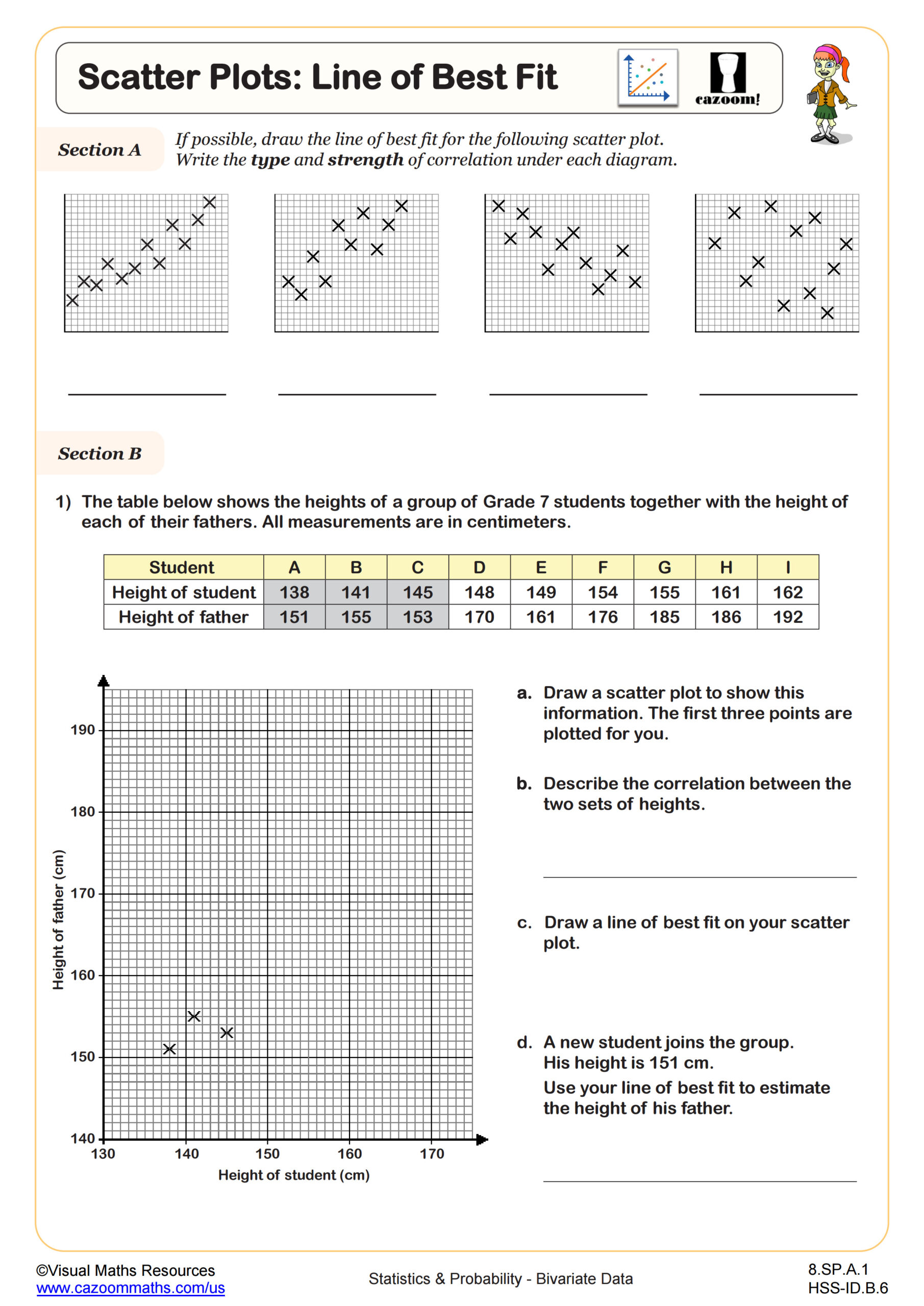
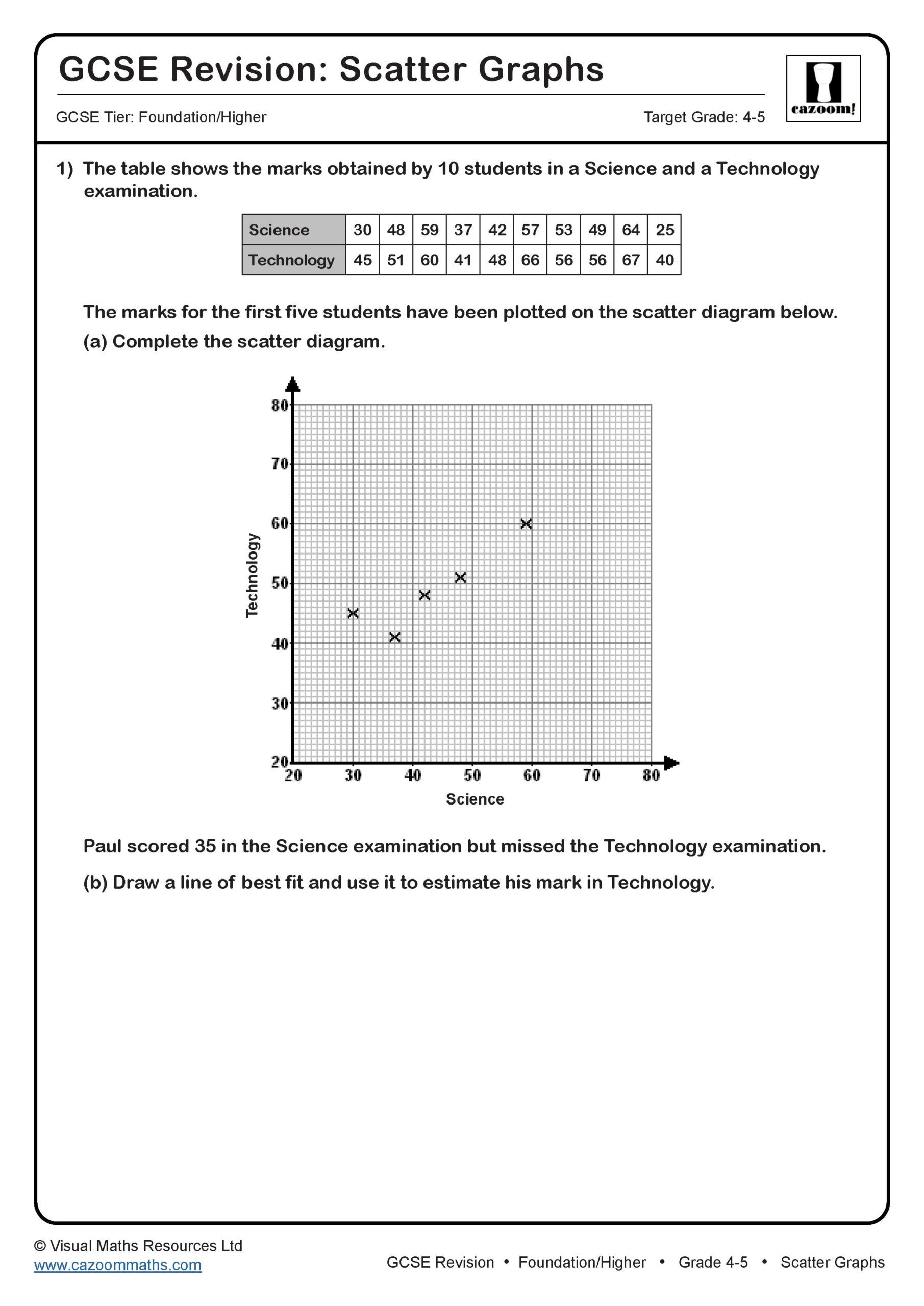
Drawing scatter plots and best-fit lines.
Applying Scatter Graphs Skills in Real-World Scenarios
The skills developed through scatter graphs worksheets have real-world applications in various fields. In science, for instance, researchers often use scatter plots to visualize the relationship between two variables, such as temperature and ice cream sales or rainfall and crop yield. Understanding how to interpret these graphs is crucial for making informed decisions and drawing accurate conclusions from data.
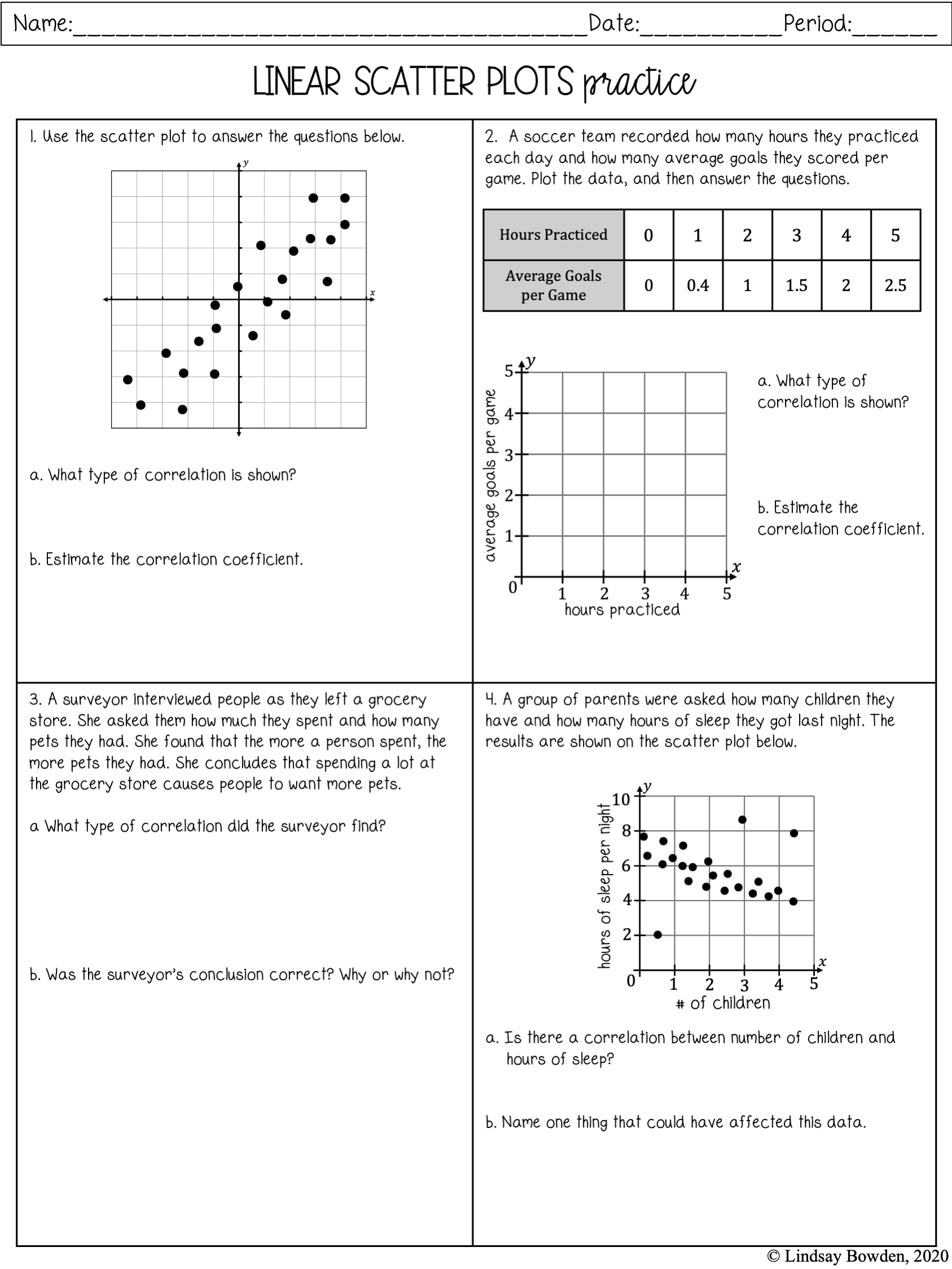
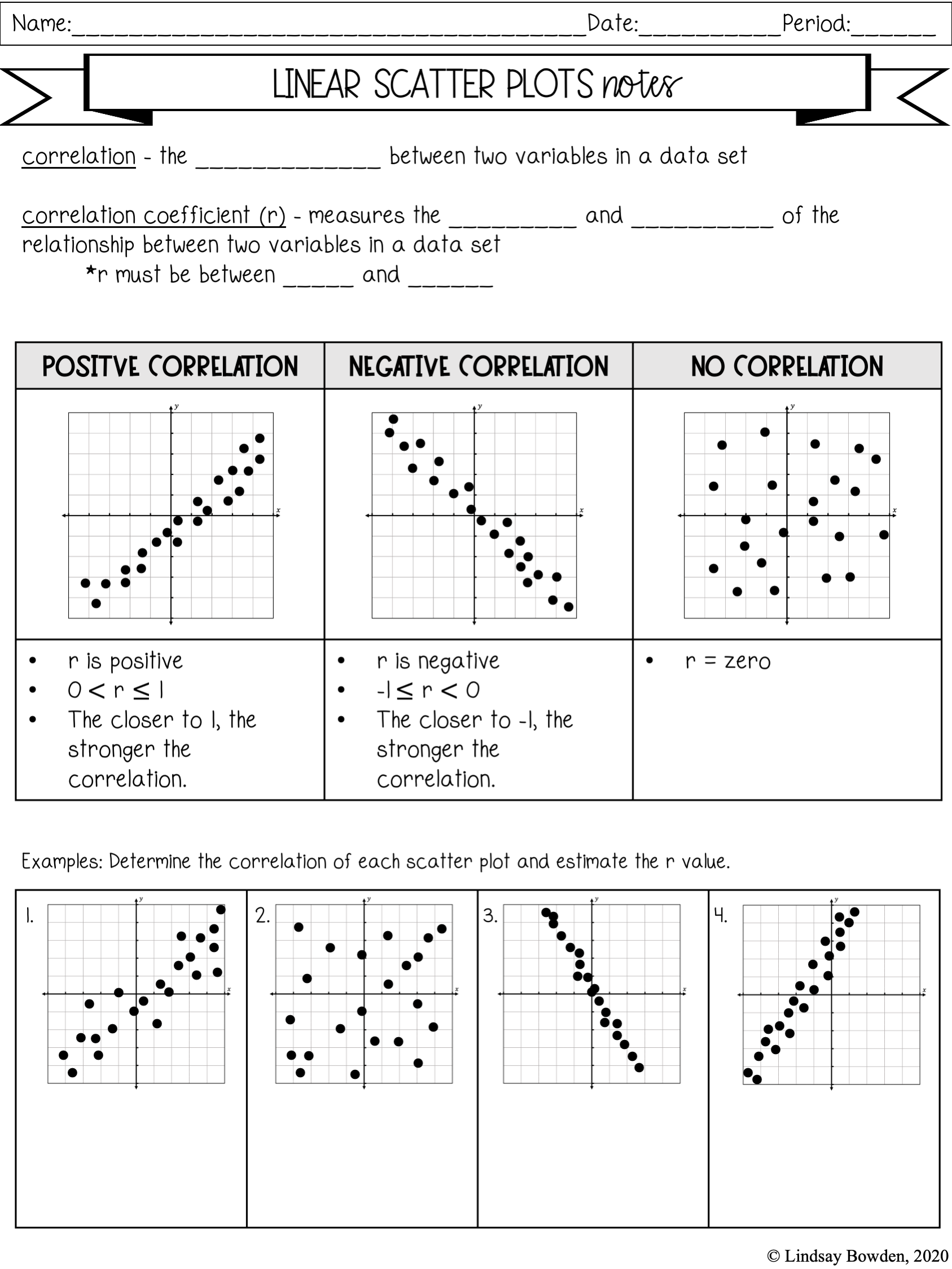
Scatter plot correlation: a worksheet library.
In business and economics, scatter graphs are used to analyze market trends, consumer behavior, and the relationship between different economic factors. Being able to read and interpret these graphs is essential for making strategic decisions and predicting future trends.
Drawing scatter graphs for year 7 and 8.
Even in everyday life, scatter graphs can be useful. For instance, tracking the relationship between study time and exam scores or the correlation between exercise frequency and overall health can help individuals make informed choices and set realistic goals.
The drawing scatter graphs worksheet is a versatile tool that empowers learners to develop essential skills in data analysis and interpretation. By engaging with this practical resource, students can develop a deeper understanding of scatter plots and their real-world applications, setting them up for success in various academic and professional pursuits.
23 Stencil Xmas Designs to Try might be a fun break from the serious stuff, but when it comes to learning, scatter graphs worksheets are a powerful tool to have in your homeschooling kit!
So, there you have it! A fun and interactive way to grasp the concept of scatter graphs. Remember, learning through doing is often the best way to truly understand a topic. Why not give the drawing scatter graphs worksheet a go and see the magic unfold? It's a great way to visualize data and explore those all-important relationships.
Feel free to share your experiences with us; we'd love to hear how this worksheet has helped you or your students. Leave a comment and let's continue the conversation!
Correlation practice for math worksheets.
Read also: 28 Gcf and Lcm Worksheets for Practice