

Multiplying Integers Worksheet Blank Overview
As a parent and a teacher, I've often found myself searching for practical resources to support my kids' learning journey. One skill that often needs reinforcement is distinguishing between facts and opinions. That's where fact and opinion worksheets come in handy! These worksheets are a simple yet effective tool to help students, and even adults, practice this essential skill. With options like activity about fact and opinion, there's a fun and engaging way to learn.
Fact Or Opinion - Worksheet | Fact and opinion worksheet for kids, Fact ...
Distinguishing Facts from Opinions: A Crucial Skill
In today's world, where information is readily available at our fingertips, it's more important than ever to equip ourselves and our young learners with the ability to discern facts from opinions. This skill is a cornerstone of critical thinking and is essential for making informed decisions and navigating the sea of information we encounter daily.
Fact Vs Opinion Worksheets
Uncovering the Truth: Fact or Fiction Worksheets
One of the most effective ways to develop this skill is through dedicated practice, and that's where fact or fiction worksheets come into play. These worksheets present learners with a variety of statements, challenging them to determine whether each is a fact or an opinion. By analyzing the given information and applying their understanding of facts and opinions, students can strengthen their ability to separate truth from fiction.
Football preview: 2026 Oakland Activities Association team capsules ...
These worksheets often include a mix of straightforward and more complex statements, catering to different learning levels. For instance, a beginner-level worksheet might present simple statements like, "The sky is blue," prompting learners to identify it as a fact due to its observable and verifiable nature. On the other hand, advanced worksheets may introduce statements like, "This is the best restaurant in town," requiring students to recognize the subjective nature of the claim and categorize it as an opinion.
Fact and Opinion Activities: Task Cards, Anchor Charts, & Worksheets ...
People Also Ask: How Can I Tell the Difference Between Facts and Opinions?
Distinguishing facts from opinions can be a challenging task, especially for young learners who are still developing their critical thinking skills. So, how can we guide them in this process?
Fact And Opinion
One effective strategy is to encourage learners to ask questions about the statements they encounter. For instance, when presented with a statement like, "Video games are a waste of time," learners can ask themselves: Is this statement based on personal preference or is it a universally accepted truth? By prompting learners to question the nature of the statement, we can help them develop a more nuanced understanding of facts and opinions.
Fact Vs Opinion Worksheet
Another useful approach is to introduce the concept of evidence. Facts are typically supported by concrete evidence or data, while opinions often lack such backing. By teaching learners to look for evidence or the lack thereof, they can more easily differentiate between the two. For example, a statement like, "The Earth is round," is supported by scientific evidence and observations, making it a fact. In contrast, a statement like, "The Earth is the most beautiful planet," is an opinion as it is based on personal perception and not verifiable through scientific means.
Teens must be well-informed to avoid being duped by AI | Opinion
How to Make the Most of Fact and Opinion Worksheets
When incorporating fact and opinion worksheets into your teaching or learning routine, there are a few practical considerations to keep in mind.
Common and Proper Nouns Test 1 | Parts of Speech Activity
First, choose worksheets that align with your learners' age and grade level. While the core skill of distinguishing facts from opinions remains the same, the complexity of the statements and the depth of analysis required can vary greatly depending on the age group. For younger learners, focus on simple, observable facts and opinions, while older students can handle more abstract and nuanced statements.
Fact Versus Opinion Activity (teacher made) - Twinkl - Worksheets Library
Second, consider the format and variety of the worksheets. Some worksheets may present statements in a list format, while others might use a story or paragraph structure. Varying the format can keep learners engaged and help them practice their skills in different contexts. Additionally, look for worksheets that offer a mix of straightforward and more challenging statements to cater to different learning levels within your group.
Reading Worksheets | Fact and Opinion Worksheets
Lastly, don't underestimate the value of discussion and collaboration. After completing a worksheet, encourage learners to share their thoughts and reasoning with their peers. This not only reinforces their understanding but also provides an opportunity for them to learn from each other's perspectives and critical thinking processes.
Fact And Opinion Worksheet With Answers Grade 3 - Free Word Template
Real-World Application: Making Data-Driven Decisions
The ability to distinguish facts from opinions is not just an academic exercise; it has real-world implications and applications. In a world where misinformation and fake news are prevalent, this skill becomes a powerful tool for navigating the information landscape.
Fact and Opinion Worksheets | Reading Comprehension - Worksheets Library
By practicing with fact and opinion worksheets, learners develop the ability to critically evaluate the information they encounter. They learn to ask questions, seek evidence, and make informed decisions based on facts rather than opinions or biased sources. This skill is especially valuable when it comes to making data-driven decisions, whether it's choosing a reliable news source, evaluating scientific claims, or even making personal choices based on objective information.
For example, imagine a scenario where a learner is researching the effectiveness of a new diet trend. By applying the skills they've practiced with fact and opinion worksheets, they can differentiate between scientific studies and personal testimonials, recognizing the former as more reliable sources of information. This ability to separate fact from opinion empowers learners to make informed choices about their health and well-being.
In conclusion, fact and opinion worksheets are a versatile and effective tool for developing critical thinking skills. By practicing with these worksheets, learners can strengthen their ability to distinguish facts from opinions, a skill that has far-reaching implications for their academic and personal lives. So, whether you're a parent, teacher, or learner, consider incorporating these worksheets into your learning journey and unlock the power of critical thinking!
Discerning facts from opinions is a powerful tool, and it's an ability that can be honed and practiced. These worksheets are a great way to get started, and I encourage you to give them a go! It's an enjoyable way to challenge yourself and your students, and it might just become a fun routine.
So, why not print a few and give them a try? It's a simple yet effective way to enhance critical thinking skills. I'd love to hear how it goes for you and your learners, so feel free to share your experiences and any fun stories that come out of this fact-finding mission!
Fact and Opinion Worksheet 3 | Reading Activity
Read also: 12 Graphing Quadratic Worksheets to Try
Related: 25 Reading Worksheets for 1st Grade
As a parent, I'm always on the lookout for fun and engaging ways to help my little ones practice their reading skills. Reading worksheets for 1st grade are a great resource for this, offering a simple yet effective way to reinforce what they're learning. These worksheets can be a real lifesaver, especially when you need some quick, printable activities to keep the kids focused and learning. I mean, who doesn't love a good 1st grade reading sheet with some fun illustrations to keep things interesting?
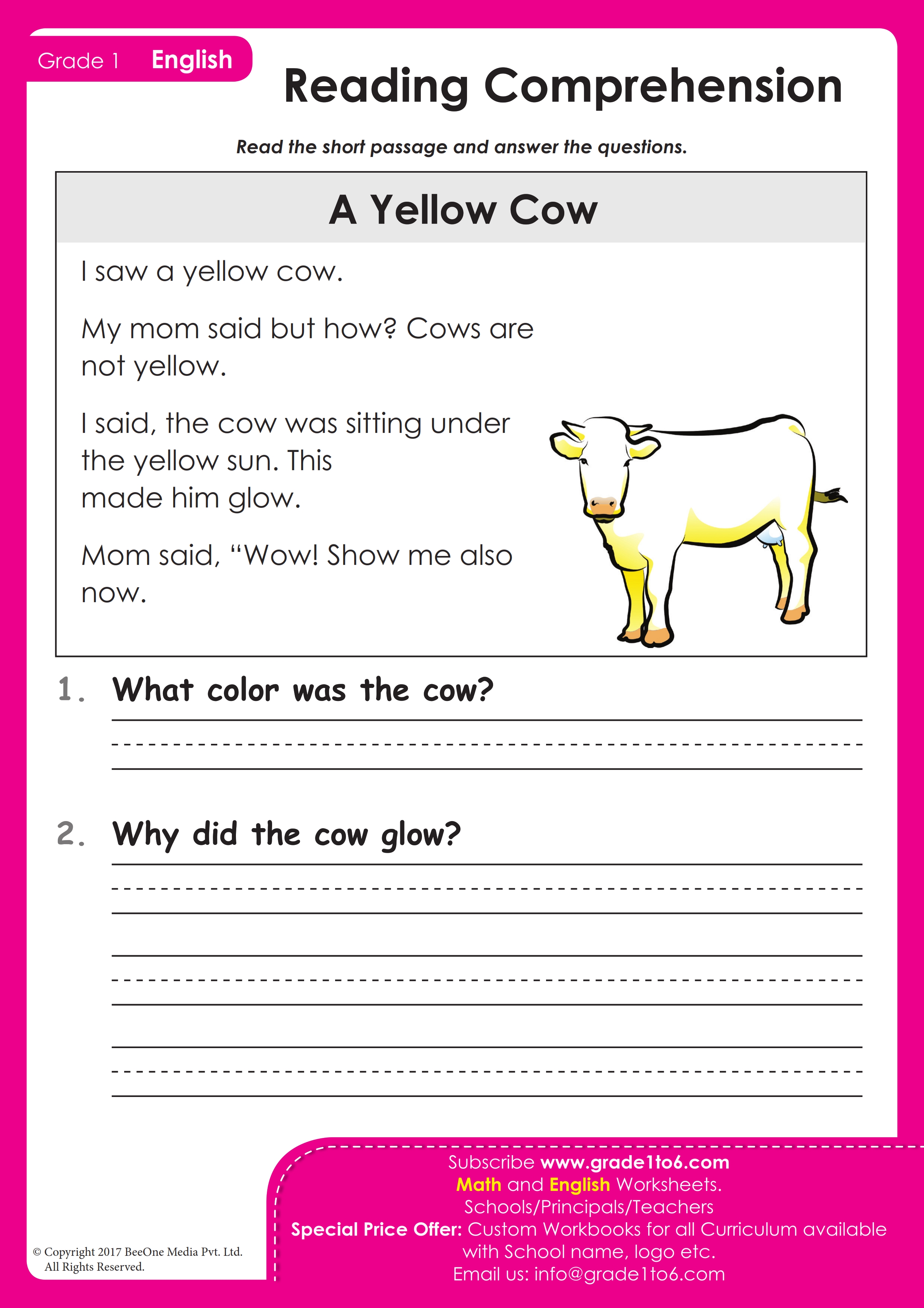
Free first grade reading comprehension practice.
Building Early Reading Skills: The Power of First Grade Worksheets
Reading worksheets for 1st grade are an incredible tool for educators and parents alike, offering a structured yet engaging approach to enhancing early literacy skills. These worksheets provide a solid foundation for young readers, covering a range of essential reading concepts and practices.
Reading resource with three engaging pages.
Unlocking the Fun with Word Families and Rhymes
One of the most delightful aspects of first grade worksheets is their ability to make learning words and their families a fun adventure. Through activities like Match the Words and Find the Rhyme, young learners embark on a journey of discovery, exploring the relationships between words and their sounds. These exercises not only reinforce phonemic awareness but also lay the groundwork for more complex reading and writing skills.
Another three-page reading resource for kids.
The beauty of word family worksheets lies in their simplicity and effectiveness. By presenting words with similar sounds or spelling patterns, children can easily identify and understand the connections between words, fostering a deeper understanding of language. Additionally, the use of rhymes and word families often incorporates playful illustrations, making the learning process an enjoyable and memorable experience.
Planner-style first grade reading comprehension.
People Also Ask: What's the Best Way to Use Reading Worksheets?
A common question among parents and educators is how to effectively utilize 1st grade reading worksheets to maximize their educational impact. The key lies in selecting the right worksheets for the right skills and adapting them to the child's learning pace.
Printable reading comprehension for beginners.
For instance, when focusing on phonics and word recognition, worksheets with picture descriptions can be incredibly helpful. These worksheets prompt children to describe what they see in the pictures, encouraging them to connect words with their visual representations. This not only strengthens their vocabulary but also enhances their ability to comprehend and interpret text.
First grade reading, a fun adventure.
How Can I Incorporate Reading Worksheets into My Teaching?
Incorporating reading worksheets for 1st grade into teaching or homeschooling routines is a straightforward and highly beneficial practice. These worksheets can be used as standalone activities or as part of a larger lesson plan, offering a structured approach to reinforcing key reading skills.
Reading comprehension, an essential first grade skill.
When selecting worksheets, it's essential to consider the child's current reading level and learning goals. For beginners, worksheets that focus on letter recognition, word families, and simple reading comprehension are ideal. As children progress, more advanced worksheets can be introduced, covering topics like sentence scrambles, story sequencing, and identifying sight words.
Reading worksheets for first graders at Harry Pelfrey's blog.
To make the most of these worksheets, it's crucial to provide clear instructions and offer guidance as needed. Encourage children to read the instructions carefully and complete the tasks independently, fostering a sense of accomplishment and confidence. Additionally, consider using worksheets as a fun break between more intensive learning activities, keeping the learning process engaging and varied.
Grade 7 comprehension passages, a challenge.
A Journey of Reading Comprehension and Critical Thinking
One of the most significant benefits of reading worksheets for 1st grade is their ability to enhance reading comprehension and critical thinking skills. As children progress through various worksheet activities, they develop a deeper understanding of text and its meaning.
21 free reading worksheets for first grade.
Worksheets that focus on reading comprehension often present short passages followed by questions or prompts. These prompts encourage children to think critically about the text, making inferences, drawing conclusions, and connecting the text to their own experiences. By engaging with these types of worksheets, children learn to extract information, understand context, and develop a love for reading and learning.
Reading activities for beginning readers, a fun start.
Furthermore, worksheets that incorporate story sequencing or identify sight words activities help children understand the structure of stories and the importance of word recognition. These skills are essential building blocks for more advanced reading and writing, laying the foundation for a lifetime of literacy and learning.
First grade reading comprehension worksheets in PDF.
In conclusion, reading worksheets for 1st grade are a versatile and powerful tool for educators and parents, offering a structured yet engaging approach to early literacy development. By incorporating these worksheets into teaching and learning routines, young readers can build a solid foundation for future academic success, all while having fun and enjoying the process of learning.
Hey there, future reading stars! We hope this blog has inspired you to explore the world of reading worksheets and their magic. Remember, these worksheets are not just about learning; they're an adventure, a fun way to build those reading muscles. So, go ahead, grab a worksheet, and let your little ones dive into the wonderful world of words. It's an exciting step towards becoming confident readers. We'd love to hear how it goes! Leave a comment or share your experience below; we're all ears!
Kindergarten and first grade reading passages.
Read also: 28 Dinosaur Pumpkin Stencil Ideas
Related: 30 Easy Ideas for Adding Kindergarten Worksheets
Sometimes, finding the right resources for our little ones' learning journey can be a bit of a challenge. Whether it's for homeschooling or just some extra practice, having access to simple yet effective tools is a game-changer. That's why adding kindergarten worksheets to our toolkit can be a real lifesaver! These worksheets, like free printable kindergarten addition worksheets, offer a fun and structured way for kids to grasp essential skills. Check out this collection of 15 Order of Operations Worksheets Pdf for some math practice ideas!
Picture addition for kindergarten math.
Adding Kindergarten Worksheets: A Powerful Tool for Early Math Skills
Kindergarten worksheets are an excellent resource for young learners, offering a structured and engaging way to develop essential mathematical skills. These worksheets provide a fun and interactive learning experience, making it easier for kids to grasp fundamental concepts and build a strong foundation. Let's explore how these worksheets can be a valuable addition to any learning environment, whether it's a classroom, homeschool, or a tutoring session.
Kindergarten addition practice sheets.
Beyond Basic Addition: Exploring Different Worksheet Types
While addition is a crucial skill, kindergarten worksheets offer a diverse range of activities to cater to different learning needs and preferences. Beyond simple addition questions, these worksheets introduce young learners to various mathematical concepts and skills. For instance, count and match worksheets encourage children to count objects and match them with the correct number, promoting number recognition and counting skills. Shape recognition fun activities help kids identify and differentiate between basic shapes, fostering spatial awareness.
Fall-themed math: addition for beginners.
Another exciting aspect of kindergarten worksheets is their ability to introduce early mathematical reasoning. Worksheets with more or less prompts challenge kids to compare quantities and understand the concept of greater than and less than. Connect the dots activities not only reinforce number sequencing but also develop fine motor skills. Additionally, number tracing games and picture addition practice worksheets provide a hands-on approach to learning, making math an enjoyable and interactive experience.
Free printable: addition and subtraction worksheets.
People Also Ask: What Age Group Benefits from Kindergarten Worksheets?
Kindergarten worksheets are specifically designed for children in the early stages of their educational journey, typically aged 4 to 6. This age group is at a crucial developmental stage, where introducing structured learning activities can have a significant impact on their overall academic growth. Kindergarten worksheets provide an ideal balance of challenge and support, ensuring that young learners can build confidence and a love for learning.
Spring math: addition, subtraction, and numbers.
However, it's important to note that these worksheets can also be beneficial for slightly older children who may need extra practice or a refresher on basic mathematical concepts. The versatility of kindergarten worksheets makes them a valuable resource for a range of learner needs, ensuring that every child can benefit from a tailored learning experience.
Adding with pictures, K-grade PDF.
How to Incorporate Kindergarten Worksheets into Your Learning Routine
Integrating kindergarten worksheets into your learning routine is a straightforward process that can be adapted to various settings. Whether you're a parent homeschooling your child, a teacher looking for supplementary classroom activities, or a tutor seeking additional practice resources, these worksheets can be a valuable addition.
Easy addition practice for young learners.
For parents and teachers, it's essential to choose worksheets that align with the child's current learning level and interests. Start with simpler activities and gradually introduce more challenging worksheets as the child's skills develop. It's also beneficial to create a dedicated learning space, whether it's a quiet corner at home or a designated area in the classroom, to provide a focused environment for worksheet practice.
Kindergarten: adding with visual aids.
When using kindergarten worksheets, it's important to consider printing and practical usage. Ensure that you have access to a printer or a reliable source for printing the worksheets. Consider using different colors or markers to make the worksheets more engaging and to encourage creativity. Additionally, laminating the worksheets can make them reusable, allowing children to practice and erase their work, promoting a sustainable learning approach.
Printable worksheets: adding to make 10.
Building Math Confidence: The Benefits of Kindergarten Worksheets
One of the key advantages of kindergarten worksheets is their ability to build math confidence in young learners. By providing a structured and supportive learning environment, these worksheets allow children to explore mathematical concepts at their own pace. The variety of activities and question types ensures that every child can find an engaging and enjoyable way to practice math.
Picture addition: distance learning resource.
Kindergarten worksheets also promote independent learning, as children can work through the activities at their own speed. This fosters a sense of achievement and empowers kids to take ownership of their learning journey. Additionally, the progressive nature of these worksheets, moving from simple to more complex tasks, ensures that children can build upon their skills and feel a sense of progression and accomplishment.
Addition worksheets for kindergarten, numbers 1-5.
Furthermore, kindergarten worksheets can be a valuable tool for identifying and addressing any learning gaps. By regularly incorporating these worksheets into the learning routine, parents and teachers can easily track a child's progress and identify areas where additional support may be needed. This early intervention can prevent learning difficulties from escalating and ensure that every child receives the necessary support to thrive academically.
Math basics: addition worksheets for kids.
In conclusion, adding kindergarten worksheets to your toolkit is a powerful way to enhance early math skills and create a positive learning experience for young learners. With their diverse range of activities and question types, these worksheets cater to different learning styles and needs, ensuring that every child can develop a strong foundation in mathematics. Whether used in a classroom, homeschool, or tutoring setting, kindergarten worksheets are a valuable resource that can make a significant impact on a child's educational journey.
Kindergarten worksheets are a fantastic way to make learning math an enjoyable adventure for little ones. With their bright colors and interactive activities, these worksheets turn learning into a fun game, making it easier for kids to grasp new concepts and build their confidence.
So, why not give it a go? Print out a few worksheets, gather the crayons, and see how your child responds. It's a simple and effective way to support their early education, and who knows, you might just discover a new favorite activity to do together! Leave a comment or share your experience below; we'd love to hear how it goes!
Fluency assessment: addition facts for kids.
Read also: How to Make Your Own Stencils at Home