Sometimes, finding the right resources to help your child or student practice a specific math skill can be a bit of a challenge. It's all about breaking down those complex concepts into manageable, bite-sized chunks, right? That's where a worksheet evaluating expressions can come in handy. These worksheets are a great way to provide focused practice, and they can be especially useful for parents and teachers who want to ensure their kids are grasping the fundamentals of evaluating expressions, whether it's for 6th grade or any other level.
Simplify and evaluate expressions.

Evaluating Expressions: Unlocking Math's Building Blocks
When it comes to mastering math, evaluating expressions is a fundamental skill that forms the basis for more complex problem-solving. A worksheet evaluating expressions is a powerful tool to help students grasp this concept, whether they're in 6th grade or beyond. These worksheets offer a structured approach to practice, breaking down expressions into manageable steps and reinforcing the idea that math is all about logical reasoning and precise calculations.

Evaluating basic expressions worksheet.
Simplifying Expressions: A Step Beyond Basic Calculations
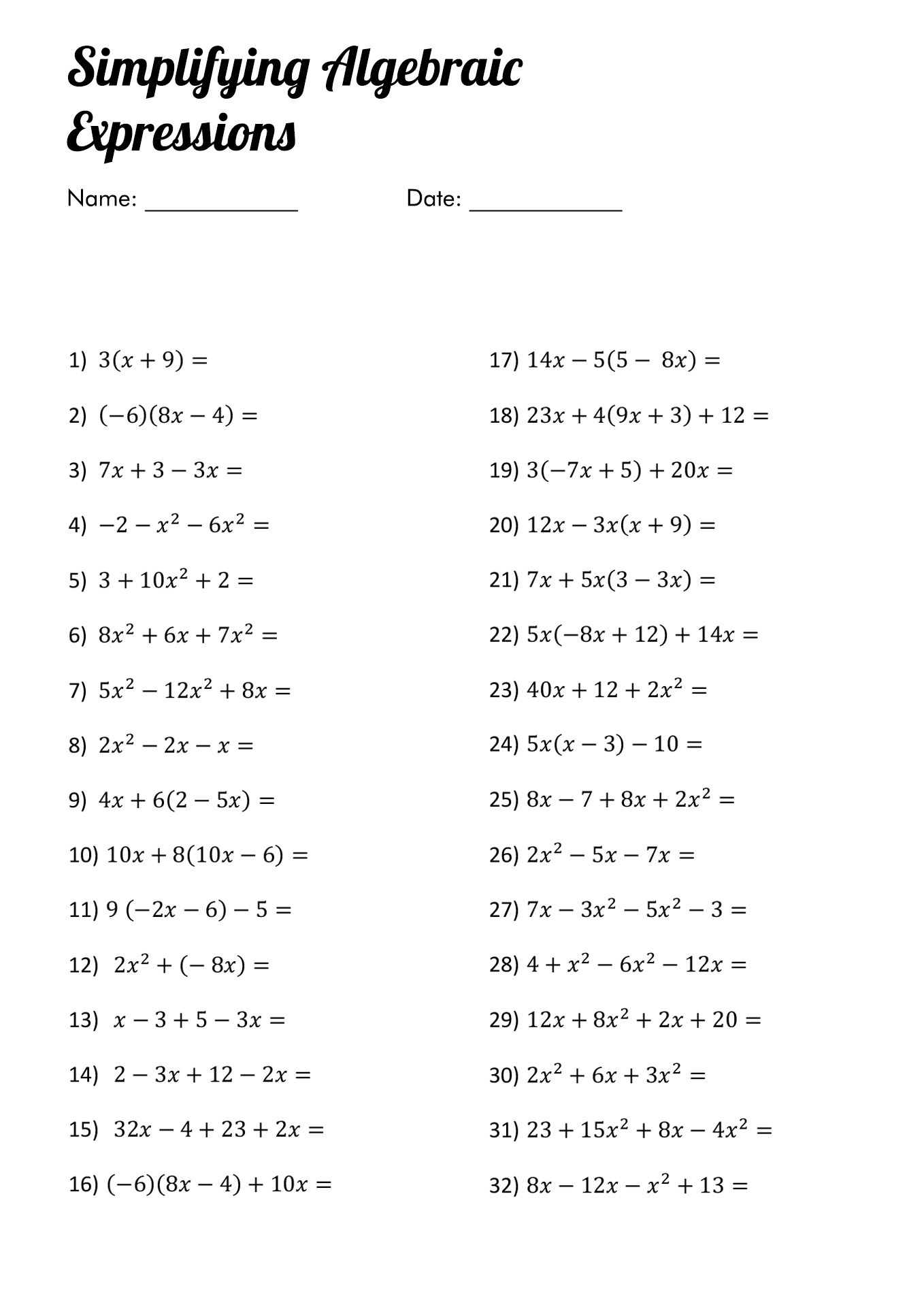
While evaluating expressions worksheets often focus on simple term substitution and plugging in values, they can also introduce more advanced concepts like expression simplification. This involves breaking down complex expressions into simpler forms, a skill that's essential for higher-level math and algebra. For instance, a worksheet might ask students to simplify an expression like 3(2x + 4) - 5(x - 2) by distributing the terms and combining like terms. This process not only helps students understand the mechanics of expression evaluation but also lays the groundwork for solving more intricate equations.

Evaluate and solve expressions.
People Also Ask: What's the Best Way to Approach Evaluating Expressions?
Approaching evaluating expressions can be a bit daunting for students, especially if they're new to the concept. A common question that arises is how to tackle these expressions step by step. The key is to break the expression down into smaller parts and work through each step systematically. For instance, if the expression is 3x + 5(2 - y), students should first calculate the value inside the parentheses, then multiply that result by 5, and finally add the product to 3x. This methodical approach ensures accuracy and helps students develop a logical mindset when dealing with mathematical problems.
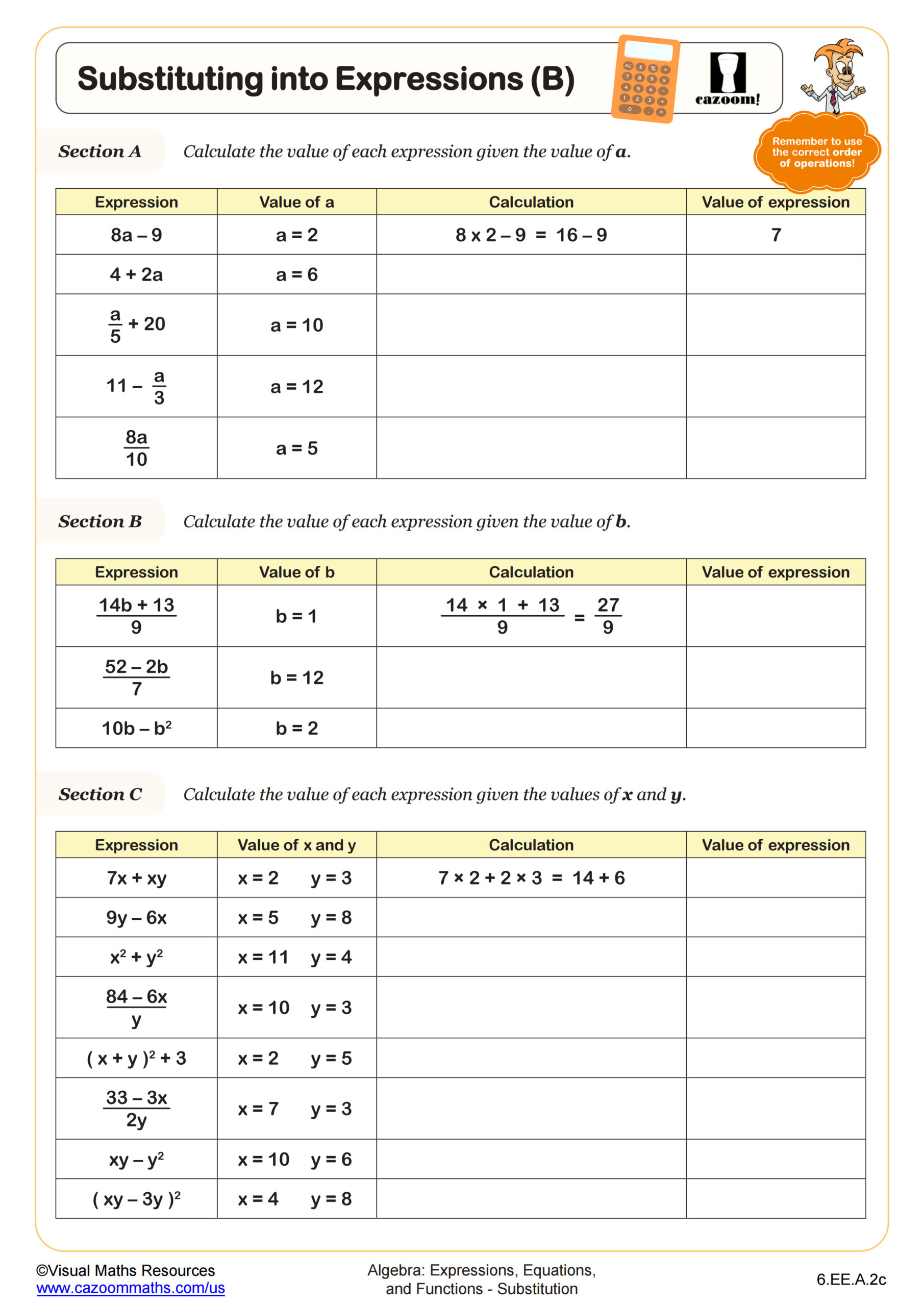
Grade 2 activity sheets - not relevant.
How to Use Worksheets Effectively: Tips for Parents and Teachers
Worksheets evaluating expressions can be a valuable resource for both parents and teachers, but using them effectively requires some strategy. First and foremost, it's important to choose worksheets that align with the student's grade level and mathematical ability. For instance, a 6th-grade student might start with basic worksheets focusing on simple term substitution, while a more advanced student could tackle worksheets involving exponents or variables. Additionally, providing clear instructions and offering guidance when needed can greatly enhance the learning experience. Teachers and parents can also encourage students to explain their thought process, reinforcing their understanding of the concepts.

Algebraic expression evaluation with one variable.
From Simple to Complex: Progressive Practice for Mastery
One of the strengths of worksheets evaluating expressions is their ability to offer progressive practice. Students can start with basic worksheets that introduce the concept of expression evaluation, gradually moving on to more challenging tasks as their skills develop. For instance, a beginner might start with expressions like 2(x + 3), progressing to more complex expressions like 3(x - 2) + 5(x + 1) as they become more comfortable with the process. This progressive approach ensures that students build a solid foundation before tackling more intricate problems, fostering a deeper understanding of mathematical concepts.

Pre-algebra expression evaluation practice.
Variable Value Finding: A Real-World Application
Evaluating expressions with variables is not just an abstract mathematical concept; it has real-world applications. For instance, in geometry, students might need to find the area of a triangle given its base and height. The formula for the area, A = 1/2 base height, is an expression that requires variable value finding. By practicing worksheets evaluating expressions, students develop the skills to apply these concepts in practical scenarios, making math a useful tool for understanding and solving real-world problems.

Free algebra 2 worksheets - not relevant.
Whether it's for classroom practice, homeschooling, or tutoring, worksheets evaluating expressions offer a versatile and effective way to enhance mathematical skills. By providing structured practice and progressive challenges, these worksheets empower students to master the building blocks of math, setting them up for success in more advanced mathematical concepts.

Algebraic expression math worksheet.
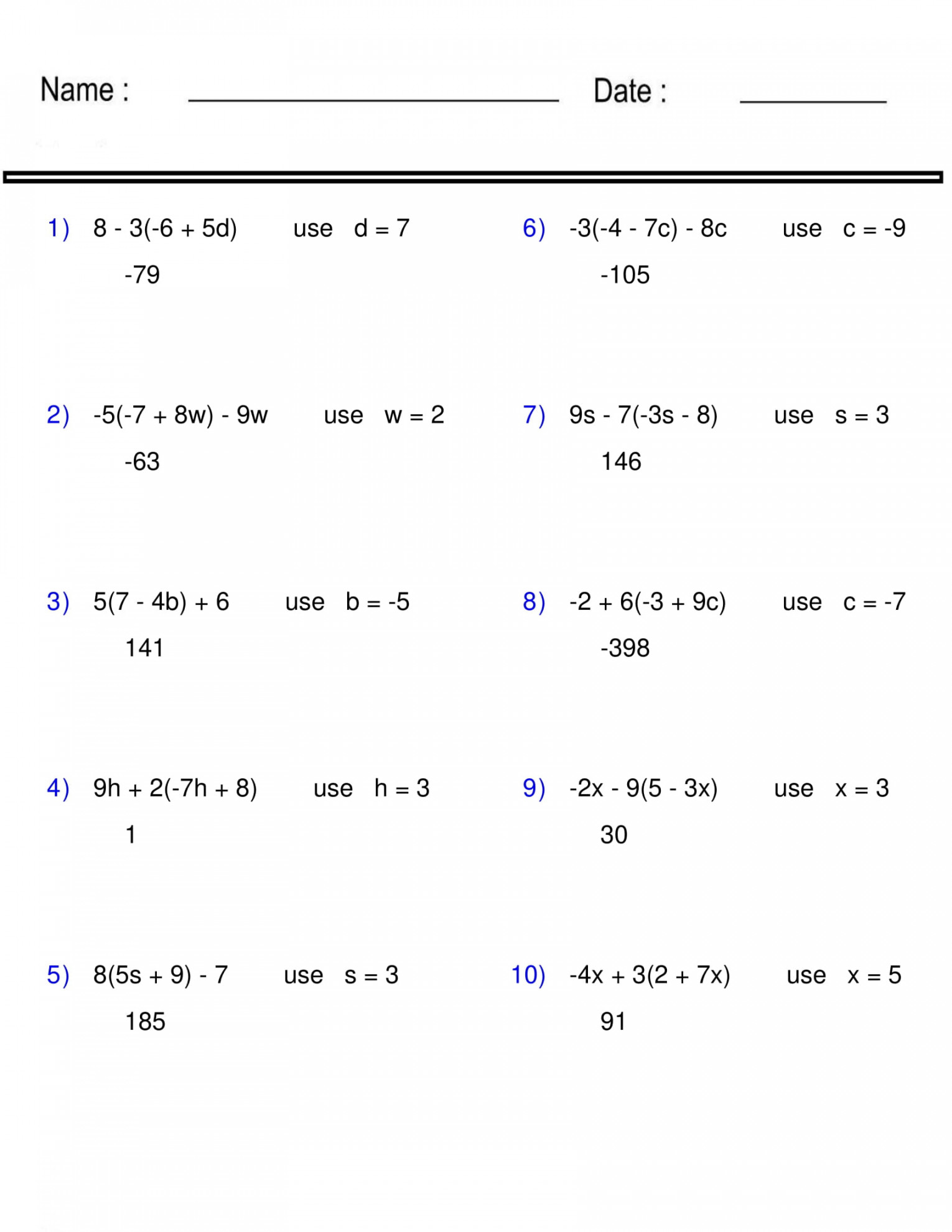
What is evaluating algebraic expressions?

Pre-algebra expression evaluation download.

Grade 5 algebra worksheets - not relevant.

Simplifying expressions for 8th graders.
Evaluating expressions is a crucial step in building a strong math foundation, and with these worksheets, students can really dive deep into this concept. It's an accessible and engaging way to practice, and I encourage you to give it a go!
Remember, math is a skill that develops with consistent practice, so why not start with these worksheets and see the progress for yourself? Leave a comment or share your experience below; I'd love to hear how these worksheets have helped you or your students!
8th grade expression simplification practice.
Read also: 27 Lightning Tattoo Stencil Ideas