



Geometry Worksheets Free Printable Overview
As a parent, I'm always on the lookout for fun and engaging ways to help my kids learn. Fibonacci grade 5 worksheet is one such resource that has been a real lifesaver! It's a great way to reinforce those tricky math concepts and keep the kids interested. I mean, who doesn't love a good puzzle? Especially when it involves an interesting pattern like the Fibonacci sequence. I recently stumbled upon a fantastic resource, a Fibonacci sequence worksheet PDF, which has been a game-changer for my homeschooling journey. It's like having a personal tutor guide them through this fascinating concept.
Grade 6 math practice with varied questions.
Exploring the Fibonacci Sequence
The Fibonacci grade 5 worksheet is an excellent tool for introducing and reinforcing the concept of the Fibonacci sequence, a fascinating mathematical pattern found in nature. This worksheet offers a range of activities that engage young learners and provide a solid foundation for understanding this unique sequence.
Exploring Fibonacci sequences and patterns.
Beyond Basic Practice: Advanced Fibonacci Exploration
While the Fibonacci sequence may seem like a simple pattern at first glance, it holds a wealth of mathematical insights and applications. The Fibonacci grade 5 worksheet goes beyond basic practice, offering more advanced challenges to stimulate critical thinking and problem-solving skills. These worksheets often include activities that encourage learners to explore the sequence's properties, identify patterns within patterns, and apply the sequence to real-world scenarios. For instance, students might be asked to analyze the spiral patterns in a pinecone or the arrangement of petals in a flower, connecting these natural phenomena to the Fibonacci sequence.
Fraction fundamentals for second-grade students.
People Also Ask: What Makes the Fibonacci Sequence So Special?
The Fibonacci sequence is not just a mathematical curiosity; it's a fundamental concept with wide-ranging applications. Its unique properties and prevalence in nature make it an intriguing topic for learners of all ages. The sequence, named after the Italian mathematician Leonardo of Pisa (also known as Fibonacci), starts with 0 and 1, and each subsequent number is the sum of the two preceding ones: 0, 1, 1, 2, 3, 5, 8, 13, 21, and so on. This simple rule results in a sequence with profound implications.
Decimal place value exercises for grades 4-6.
One of the most fascinating aspects of the Fibonacci sequence is its connection to nature. The sequence can be observed in the arrangement of leaves on a stem, the spiral patterns in pinecones and sunflowers, and even the growth patterns of various animals and plants. This natural occurrence of the sequence adds a layer of intrigue and relevance to mathematical learning, making it a captivating topic for students.
Golden ratio grid template for Fibonacci art.
How to Make the Most of the Fibonacci Worksheet: Tips and Tricks
When using the Fibonacci grade 5 worksheet, there are a few strategies that can enhance the learning experience. First, encourage students to explore the sequence visually. Many worksheets include visual representations of the sequence, such as spirals or rabbit populations, which can help learners grasp the concept more intuitively. Additionally, providing real-world examples and applications can make the sequence more relatable and engaging. For instance, teachers or parents might discuss the Fibonacci sequence's role in art and architecture, or its use in computer algorithms and data structures.
Division exercises: a free printable PDF.
Another effective approach is to incorporate hands-on activities. Students can create their own Fibonacci spirals using string or create a "Fibonacci garden" by planting seeds in a pattern that follows the sequence. These activities not only reinforce the sequence but also promote creativity and a deeper understanding of mathematical concepts.
How to calculate the Fibonacci sequence in Spanish.
Nurturing a Love for Math: The Benefits of Fibonacci Exploration
Exploring the Fibonacci sequence offers numerous benefits beyond just learning a mathematical concept. It encourages a growth mindset, as students discover that even complex patterns can be understood and applied. The sequence's prevalence in nature fosters a sense of wonder and curiosity, motivating students to explore further. Additionally, the Fibonacci sequence's connection to real-world applications, such as in art, architecture, and computer science, can inspire students to see the relevance of math in their daily lives and future careers.
Grade 6 math activities: a free template.
The Fibonacci grade 5 worksheet is a valuable resource for educators and parents, providing a fun and engaging way to introduce and reinforce this fascinating mathematical concept. By offering a range of activities and challenges, it caters to different learning styles and abilities, ensuring that all students can grasp the sequence and its applications. With its focus on visual learning, real-world connections, and hands-on exploration, the worksheet makes learning about the Fibonacci sequence an enjoyable and enriching experience. 19 Homeostasis Graph Worksheet Answers offer a similar opportunity to explore another fascinating mathematical concept, providing a well-rounded learning experience for young minds.
Fraction practice for fifth-grade math.
Grade 5 math challenge: a fun worksheet.
Phonics review sheets for daily practice.
Year 9 sequence worksheets: a PDF resource.
The Fibonacci sequence is an incredible phenomenon, and it's so exciting to see how it captures the curiosity of young minds. This worksheet is a fantastic resource to spark their interest and get them thinking mathematically.
Why not give it a go and see how your little mathematicians take to it? It's a fun way to explore a unique pattern and a great conversation starter too. Leave a comment and let us know how it goes! We'd love to hear about your experiences and any tips you have for making math fun.
Decimal rounding practice for fifth graders.
Read also: 26 Printable Worksheets for Volume of Rectangular Prisms
Related: 24 Distance Formula Worksheets for Practice
Math can be a tricky subject for many, and sometimes all you need is a simple tool to help you grasp a concept. That's where the distance formula worksheet comes in handy! It's a practical resource for anyone wanting to brush up on their skills, whether you're a student, parent, or teacher. With a distance formula worksheet PDF, you can easily access and print out practice problems, making learning more accessible and fun. It's a great way to ensure everyone stays on track and can master this formula, just like with our 13 Tracing Letter Worksheets for Kids guide!
Helping students with distance formula practice.
Unlocking the Distance Formula: A Practical Guide
Mastering the Art of Calculating Distances
The distance formula worksheet is an invaluable tool for anyone looking to enhance their mathematical prowess, especially when it comes to calculating distances between points. This worksheet serves as a comprehensive guide, offering a structured approach to mastering the distance formula. By providing a series of practice problems, it enables learners to apply the formula in various scenarios, solidifying their understanding of this essential mathematical concept.
Whether you're a student aiming to ace your geometry class, a parent assisting with homework, or a teacher seeking engaging resources, the distance formula worksheet is an indispensable resource. It offers a hands-on approach to learning, allowing individuals to actively engage with the material and develop a deeper understanding of distance calculation.
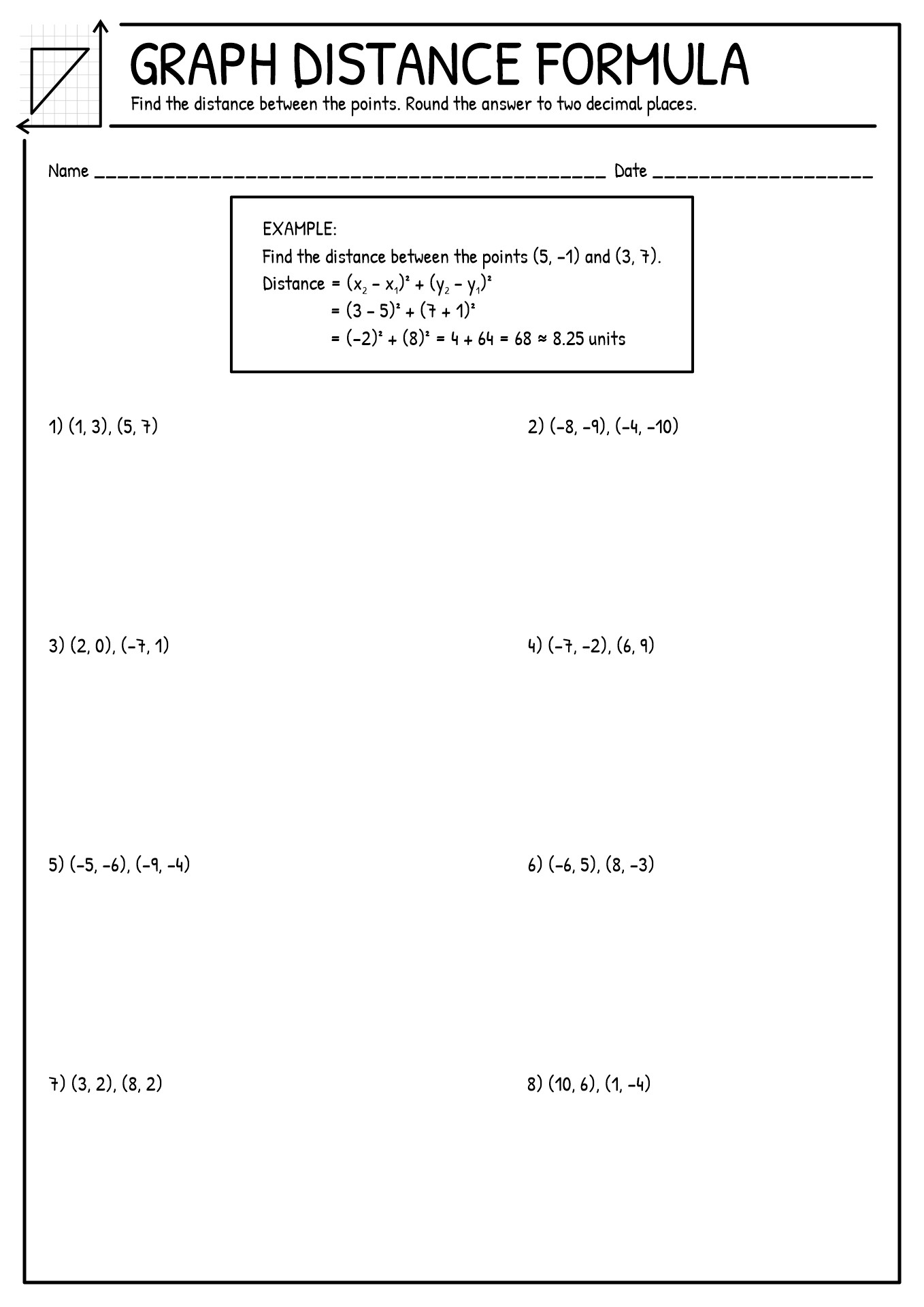
Visualizing the distance formula on graphs.
Exploring Advanced Worksheets for Challenging Scenarios
For those seeking a more advanced challenge, there are specialized distance formula worksheets designed to push learners' skills to the next level. These worksheets often incorporate real-world scenarios, requiring students to apply the distance formula in practical contexts. By presenting more complex problems, these advanced worksheets encourage critical thinking and problem-solving skills, preparing students for more intricate mathematical concepts.
Additionally, these advanced worksheets may introduce new concepts, such as calculating distances in three-dimensional spaces or dealing with unknown variables. By tackling these challenges, learners not only reinforce their understanding of the distance formula but also develop a broader mathematical skill set.
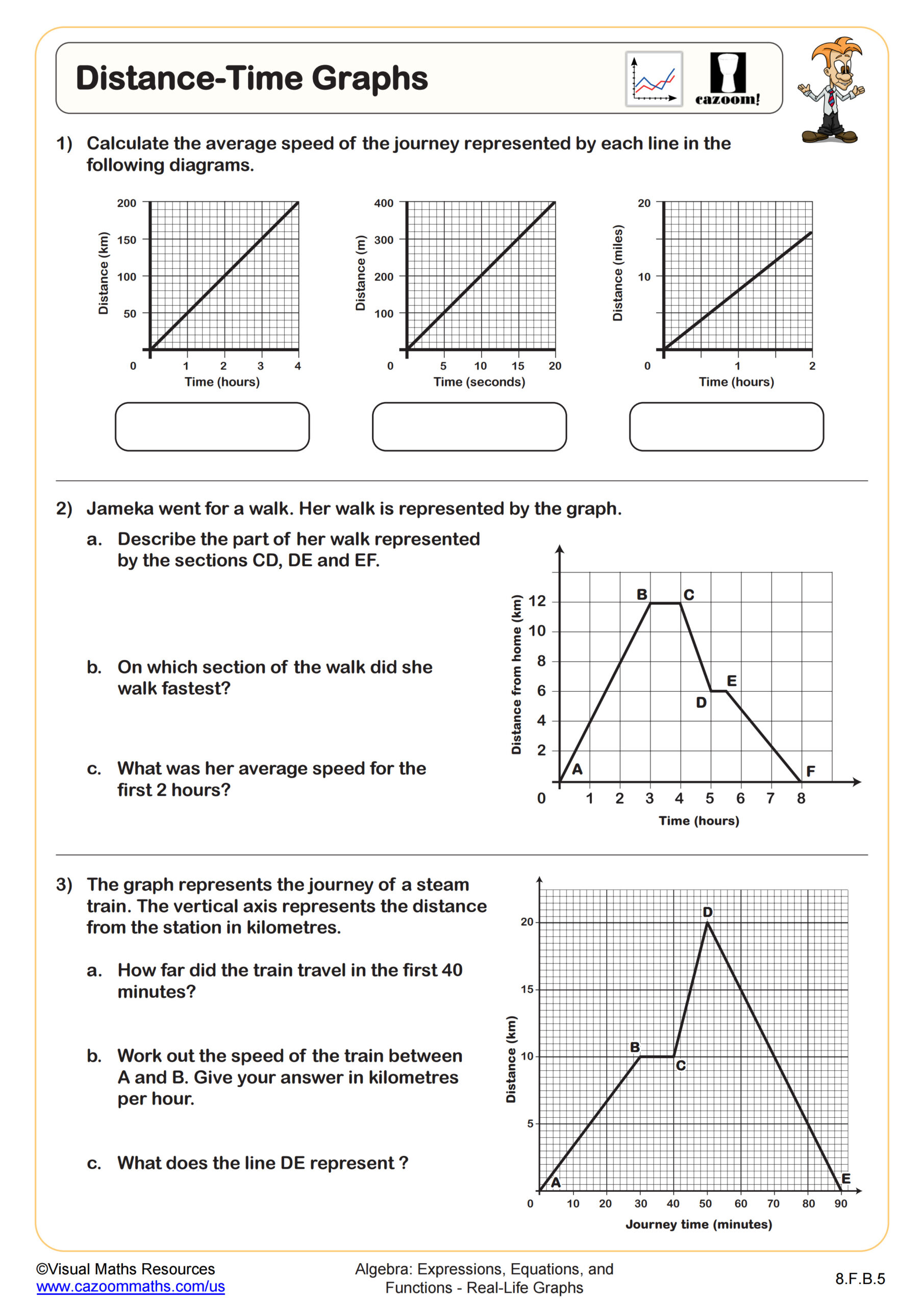
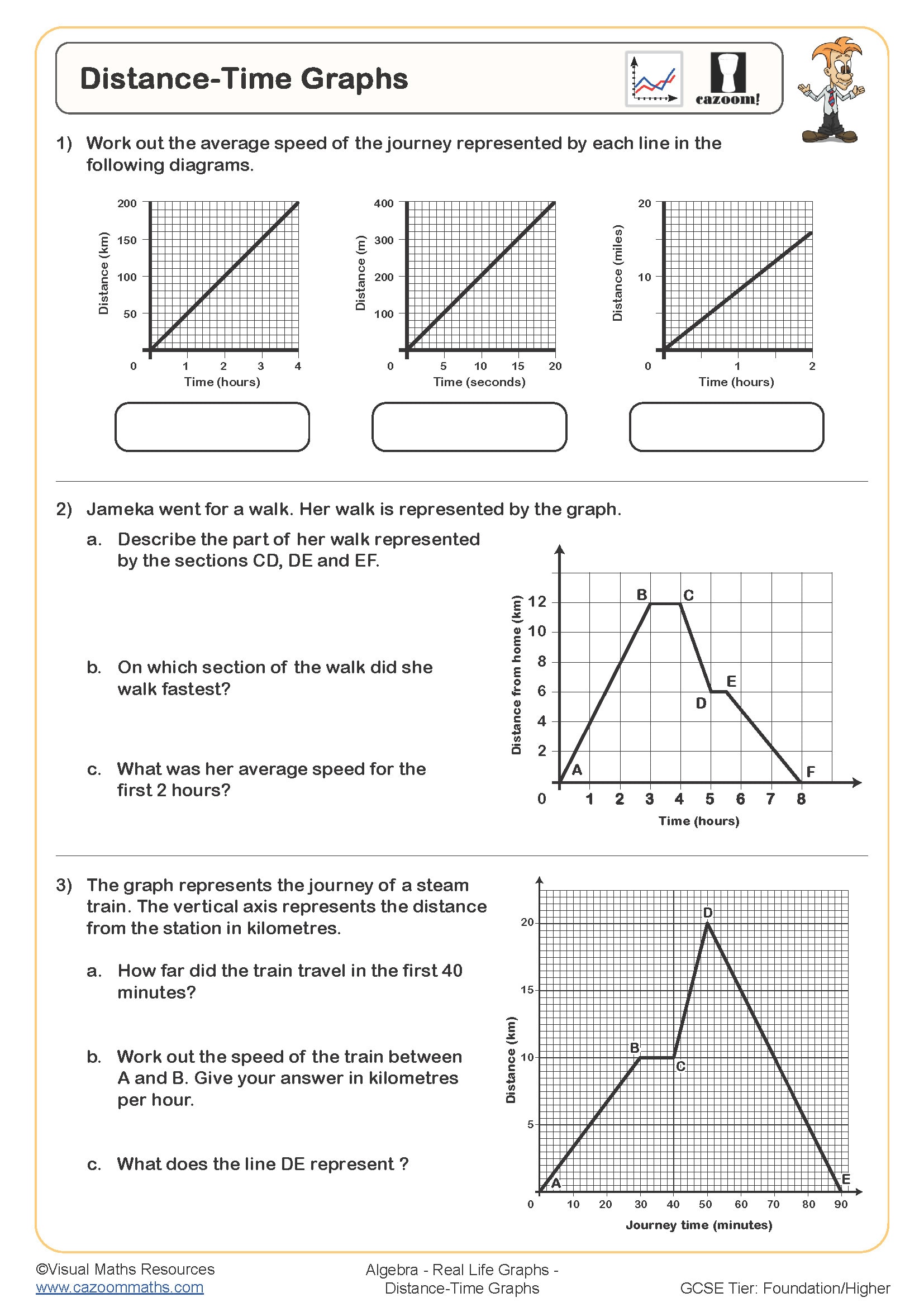
Calculating speed: a practical exercise.
People Also Ask: How Do I Use the Distance Formula Worksheet Effectively?
When utilizing the distance formula worksheet, it's essential to approach it with a strategic mindset. Here are some tips to maximize your learning experience:
- Start with the Basics: Begin by familiarizing yourself with the fundamental concepts and formulas. Ensure you understand the variables and how they relate to the distance formula.
- Practice Regularly: Consistency is key. Dedicate regular practice sessions to reinforce your understanding and build confidence. The more you practice, the more natural the formula will become.
- Vary Your Practice: Don't limit yourself to a single type of problem. Explore different scenarios and practice problems to enhance your versatility.
- Seek Guidance: If you encounter difficulties, don't hesitate to seek help. Consult with teachers, tutors, or online resources to clarify any misconceptions and gain a deeper understanding.
Rearranging equations: a fun worksheet.
How Can I Incorporate the Distance Formula Worksheet into My Learning Journey?
Incorporating the distance formula worksheet into your learning routine can be a seamless and effective process. Here's a step-by-step guide:
- Access the Worksheet: Begin by obtaining a copy of the distance formula worksheet. You can find various versions online, including distance formula worksheet PDFs, which are easily printable. 21 Worksheets for the Letter U offers a great starting point for finding high-quality resources.
- Print and Prepare: Once you have the worksheet, print it out and gather any necessary materials, such as a pencil, eraser, and a ruler if needed. Creating a dedicated workspace can enhance your focus and learning experience.
- Set a Goal: Determine your learning objective for the session. Are you aiming to master a specific concept, improve your problem-solving skills, or simply reinforce your understanding? Setting a clear goal will guide your practice.
- Work Through the Problems: Start with the first problem and carefully read the instructions. Apply the distance formula step by step, ensuring you understand each calculation. If you encounter an unknown variable, use logical reasoning and the provided information to determine its value.
- Check Your Work: After completing a problem, take the time to check your answer. Compare your solution with the provided answer key or consult with a teacher or tutor for feedback. This step is crucial for identifying any mistakes and reinforcing your learning.
- Reflect and Learn: As you work through the worksheet, reflect on your progress. Identify areas where you excelled and those that require further practice. Adjust your learning strategy accordingly to address any weaknesses and build upon your strengths.
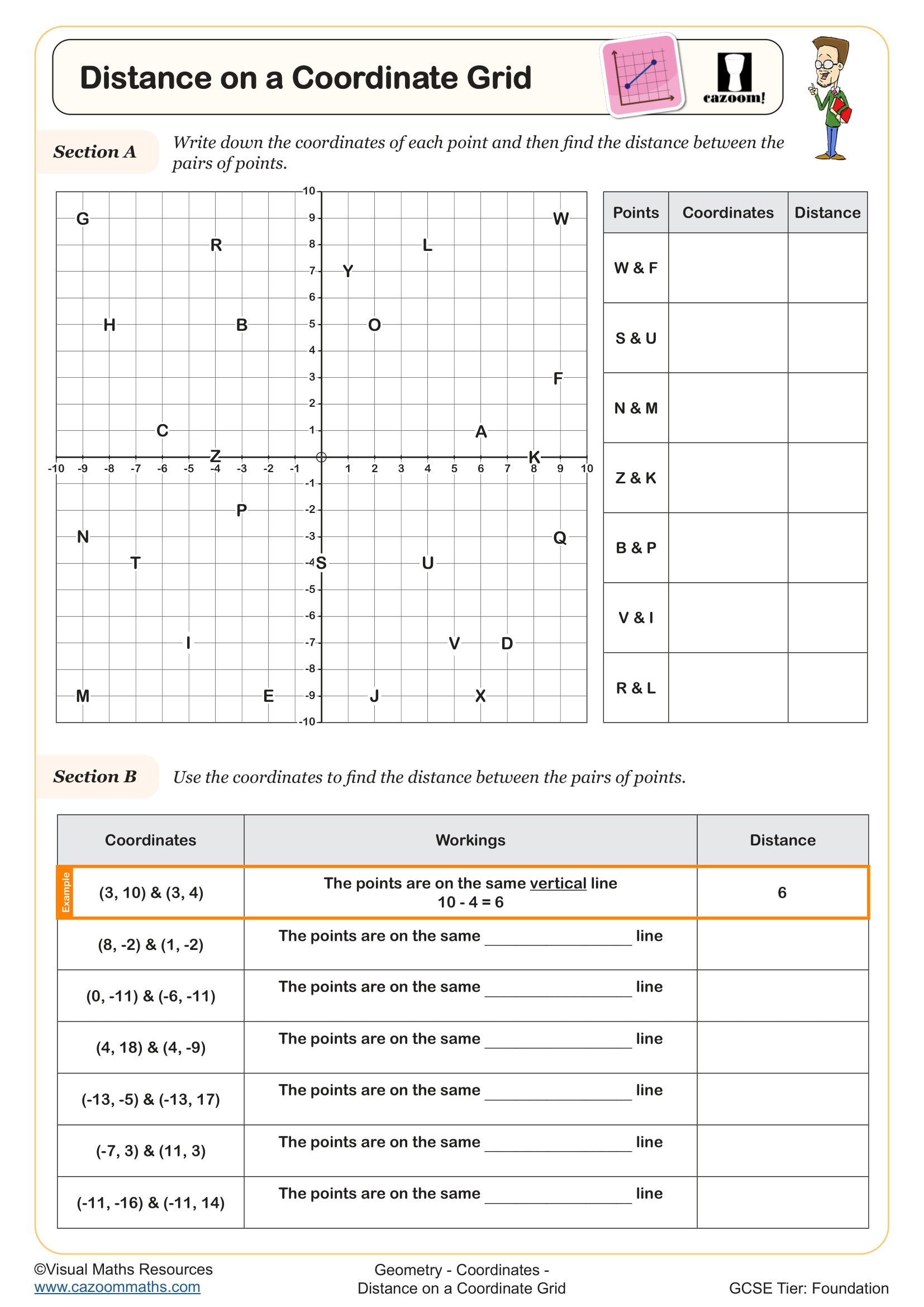
Year 7 coordinates: a foundational skill.
Nurturing Mathematical Confidence: The Power of Practice
The distance formula worksheet is more than just a collection of problems; it's a powerful tool for nurturing mathematical confidence and proficiency. By consistently practicing with this worksheet, learners develop a deep understanding of the distance formula and its applications.
Through repeated exposure and practice, the distance formula becomes second nature, enabling individuals to calculate distances accurately and efficiently. This mastery not only enhances their mathematical skills but also boosts their confidence in tackling more complex mathematical concepts.
Graphical representation of distance formula.
Furthermore, the distance formula worksheet provides a structured framework for learning. It allows learners to progress at their own pace, gradually building their skills and knowledge. By starting with simpler problems and gradually advancing to more challenging scenarios, learners can develop a solid foundation and a sense of accomplishment as they master each level.
Free resource for distance formula practice.
In a classroom setting, teachers can utilize the distance formula worksheet as a valuable teaching aid. It can be incorporated into lesson plans, providing a hands-on learning experience for students. Teachers can guide students through the worksheet, offering explanations and support, ensuring a comprehensive understanding of the concept.
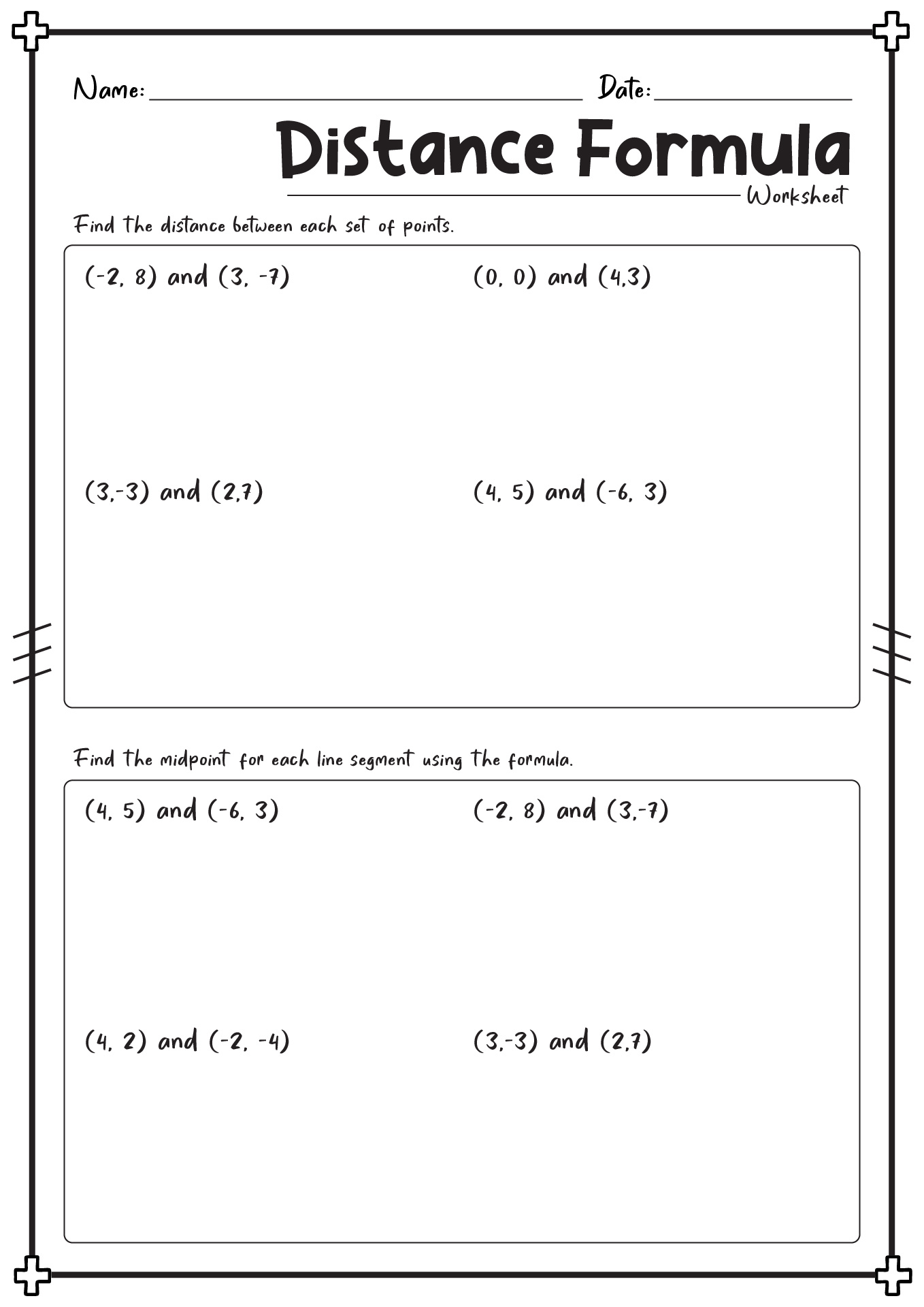
Distance formula: printable worksheets and examples.
For homeschooling parents or tutors, the distance formula worksheet offers a flexible and effective learning tool. It can be tailored to the individual needs and learning pace of the student, providing a personalized learning experience. By combining the worksheet with practical examples and real-world applications, learners can develop a deeper connection to the material.
Online distance formula practice with answers.
Whether used in a classroom, homeschool, or as a self-study resource, the distance formula worksheet empowers learners to take control of their mathematical journey. It equips them with the skills and confidence to tackle distance-related problems, fostering a love for mathematics and a deeper appreciation for its practical applications.
Comprehensive distance formula worksheet.
As learners progress through the worksheet, they not only strengthen their mathematical foundation but also develop critical thinking and problem-solving skills. The distance formula worksheet serves as a bridge, connecting theoretical concepts with real-world scenarios, and preparing learners for more advanced mathematical endeavors.
The distance formula: a detailed worksheet.
In conclusion, the distance formula worksheet is a versatile and powerful resource, offering a practical and engaging approach to learning. By embracing this tool, learners can unlock the secrets of distance calculation, building a solid mathematical foundation and a lifelong love for learning.
Finding distance on a coordinate plane.
Now that you've got the distance formula worksheet in your toolkit, it's time to put it to good use! Remember, practice makes perfect, so don't be afraid to dive in and start calculating. The more you work with these worksheets, the more comfortable you'll become with the formula and its applications.
So, grab a pen, print out a few copies, and get ready to explore the world of distances. It's a fun and practical way to sharpen your math skills. Give it a go, and don't forget to leave a comment or share your progress below. We'd love to hear how it's going!
Speed and time calculations for beginners.
Read also: 23 Simple Sunflower Tattoo Stencil Ideas
Related: 30 Parts of Speech Worksheets for Classroom Fun
As a parent, I'm always on the lookout for fun and engaging ways to help my kids learn. When it comes to grammar, parts of speech worksheets can be a real lifesaver! These handy resources are perfect for reinforcing those tricky grammar rules and helping kids understand the building blocks of language. From nouns to verbs, parts of speech worksheets with examples and exercises are a great way to practice, and they're especially useful for visual learners.
Third-grade grammar practice for parts of speech.
Mastering the Art of Language: The Essential Role of Parts of Speech Worksheets
Parts of speech worksheets are an incredibly versatile and effective tool for language learning. These worksheets provide a structured and engaging way to explore the building blocks of language, offering a comprehensive understanding of grammar and its application. By focusing on the different parts of speech, learners can develop a strong foundation in language arts, which is essential for effective communication and academic success.
All-in-one printable guide to parts of speech.
Beyond the Basics: Exploring Advanced Parts of Speech
While parts of speech worksheets often cover the fundamental categories like nouns, verbs, adjectives, and adverbs, they can also delve into more advanced concepts. These worksheets can introduce learners to the often-overlooked parts of speech, such as pronouns, prepositions, conjunctions, and interjections. By exploring these less-discussed elements, students gain a deeper understanding of language structure and its nuances. Advanced parts of speech worksheets challenge learners to think critically about sentence construction and the role each word plays, fostering a more sophisticated grasp of language.
Test your knowledge of common and proper nouns.
People Also Ask: What are the Benefits of Parts of Speech Worksheets?
Parts of speech worksheets offer a multitude of benefits for language learners. Firstly, they provide a structured and focused approach to grammar, helping learners identify and understand the various parts of speech and their functions. This clarity is essential for building strong writing and communication skills. Additionally, parts of speech worksheets often include engaging exercises and activities, making learning fun and interactive. Whether it's through fill-in-the-blank sentences, matching exercises, or creative writing prompts, these worksheets offer a dynamic learning experience that keeps students engaged and motivated.
Printable activity to identify parts of speech.
How to Use Parts of Speech Worksheets Effectively
Parts of speech worksheets can be utilized in various learning environments, from classrooms to homeschooling settings. For teachers, these worksheets provide a ready-made resource for grammar lessons, offering a structured and progressive approach to teaching language arts. Teachers can assign worksheets as individual or group activities, allowing students to work at their own pace and receive immediate feedback. For homeschooling parents or tutors, parts of speech worksheets offer a convenient and effective way to reinforce grammar concepts. They can be used as standalone activities or integrated into larger language arts lessons, providing a flexible and adaptable learning tool.
Visual charts to understand parts of speech.
When using parts of speech worksheets, it's important to consider the learner's age and skill level. Worksheets can be tailored to different grade levels, ensuring that the content is appropriate and challenging. For younger learners, worksheets with simple sentences and clear examples are ideal. As students progress, more complex sentences and advanced concepts can be introduced. Additionally, worksheets can be printed or accessed digitally, depending on the learner's preferences and the availability of resources.
Breaking down the parts of speech.
Creative Practice: Making Language Learning Fun
Parts of speech worksheets can be a great way to make language learning enjoyable and interactive. By incorporating creative activities and exercises, learners can engage with grammar concepts in a fun and memorable way. For example, worksheets can include sentence-building activities where students create their own sentences, using different parts of speech to construct meaningful phrases. This not only reinforces grammar rules but also encourages creativity and critical thinking.
Examples of the eight parts of speech.
Another engaging activity is a parts of speech scavenger hunt. Learners can be given a list of parts of speech and asked to find examples in their surroundings or in a text. This activity not only reinforces the identification of parts of speech but also encourages observation and active learning. Additionally, parts of speech worksheets can be used as a basis for group discussions or debates, allowing learners to explore the nuances of language and its usage in a collaborative setting.
Grammar worksheets for third-grade students.
In conclusion, parts of speech worksheets are a valuable resource for language learning, offering a structured and engaging approach to grammar. By covering the essential parts of speech and providing a range of activities, these worksheets cater to different learning styles and skill levels. Whether used in classrooms, homeschooling, or tutoring settings, parts of speech worksheets are a versatile tool that can make language learning an enjoyable and effective experience. So, why not give them a try and unlock the power of language with these practical and fun resources? 26 Kindergarten Prep Worksheets can be a great starting point for younger learners, offering a foundation for their language journey.
Advanced parts of speech for grade 10.
Identifying parts of speech in context.
Reciprocal relationships between parts of speech.
PDF guide to parts of speech.
Hey there, language enthusiasts! We hope this article has inspired you to dive deeper into the world of grammar and its wonderful parts of speech.
Remember, mastering language is an ongoing adventure, and these worksheets can be your trusty companions on this path. So, why not give them a go? Print out a few, try them out, and see the magic unfold. It's a fun and effective way to brush up on your grammar skills, and who knows, you might just become a grammar guru!
Feel free to leave a comment and share your experiences with us. We'd love to hear how these worksheets have helped you or any fun stories that come out of your grammar adventures!
Using parts of speech to create sentences.
Read also: 27 Two Digit Multiplication Worksheets for Practice