



Place Value Practice Worksheets Grade 4 Overview
As a parent, I'm always on the lookout for fun and engaging ways to help my kids learn. Worksheets for figurative language are a brilliant tool for parents and teachers alike! These resources offer a simple yet effective way to practice and reinforce language skills. With free printable figurative language worksheets, you can easily create a personalized learning experience for your child or student.
Study planner for 5th graders' figurative language.
Unlocking the Power of Language: A Journey with Worksheets
Figurative language is a beautiful and expressive way to communicate, and worksheets are an excellent tool to help learners of all ages grasp this art. These resources offer a structured yet creative approach to understanding and using figurative language, making learning an enjoyable experience.
Working with figurative language: a practice session.
Exploring Similes and Metaphors: A Creative Journey
One of the most engaging aspects of worksheets for figurative language is their ability to guide learners through the world of similes and metaphors. These figures of speech add depth and imagination to writing and speaking, and worksheets provide a structured path to mastering them.
Free library of figurative language worksheets.
Similes, comparing one thing to another using "like" or "as," are often the first step in this journey. Worksheets might present sentences like, "Her voice was as sweet as honey," and prompt learners to identify the simile and explain its effect. This not only reinforces language skills but also encourages creativity and critical thinking.
21 new ways to teach figurative language.
Metaphors, where a word or phrase is applied to something it's not literally, can be a bit more challenging. Worksheets might present a sentence like, "Time is a thief," and ask learners to explain the metaphor's meaning and its impact on the reader. As learners progress, worksheets can introduce more complex metaphors, encouraging them to create their own and understand the power of this figurative device.
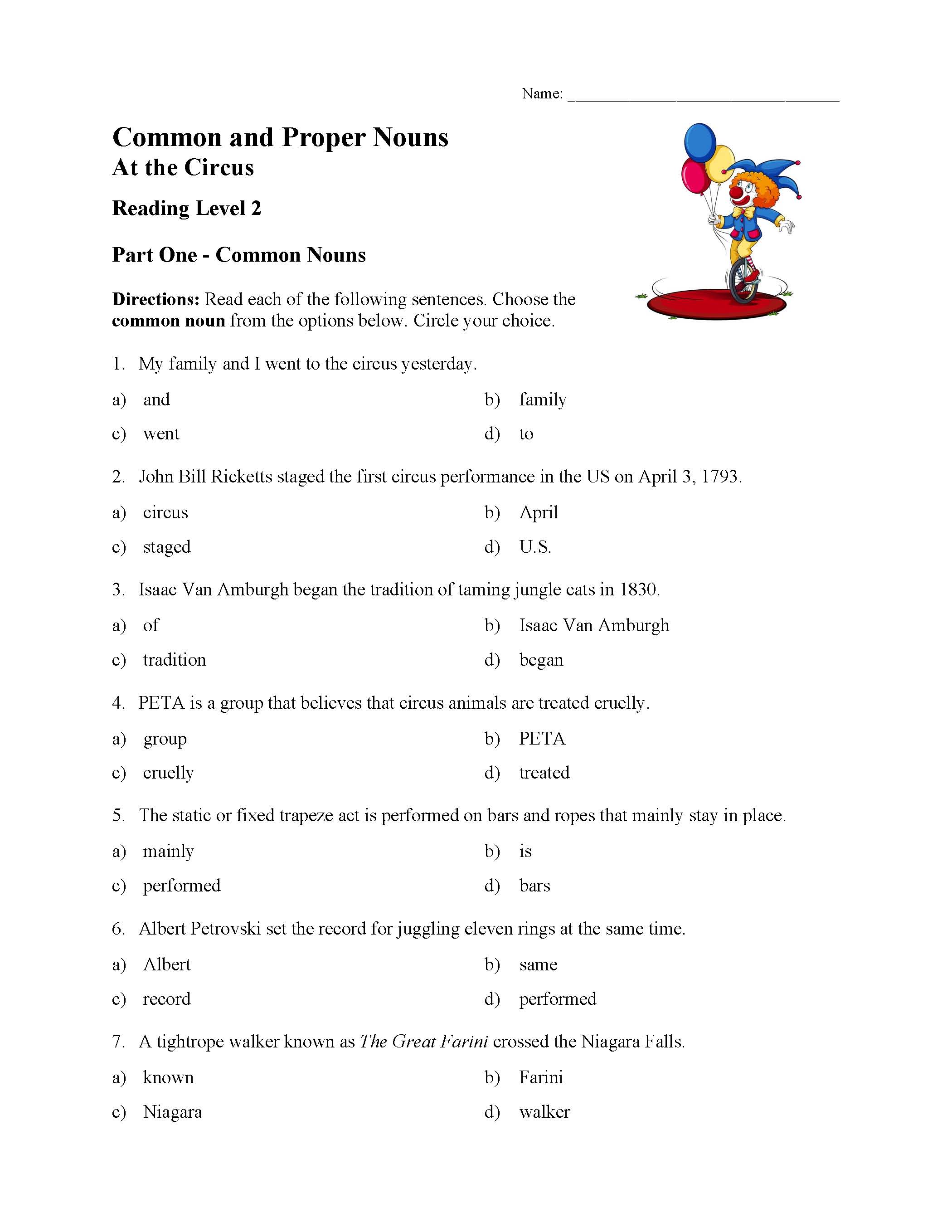
Common and proper nouns test activity.
People Also Ask: What Other Figurative Devices Do These Worksheets Cover?
Figurative language worksheets offer a comprehensive approach to understanding and using language creatively. In addition to similes and metaphors, these resources often cover a range of other devices, ensuring a well-rounded understanding of this expressive aspect of language.
Middle school figurative language practice.
Learners might encounter personification, where human characteristics are attributed to non-human objects or abstract concepts. Worksheets could present a sentence like, "The wind whispered secrets to the trees," and ask learners to identify the personification and explain its effect. This not only reinforces understanding but also encourages empathy and a deeper connection to the natural world.
Circle tracing: fine motor skills practice.
Hyperbole, an exaggeration used for emphasis, is another device often covered. Worksheets might present a sentence like, "I'm so hungry I could eat a horse," and prompt learners to identify the hyperbole and discuss its purpose. This not only adds humor to learning but also teaches learners to recognize and use exaggeration effectively.
Quick checks for figurative language review.
Idioms, those quirky expressions with meanings different from their literal interpretation, are also a fun aspect of language covered by these worksheets. A sentence like, "It's raining cats and dogs," might be presented, with learners identifying the idiom and explaining its meaning. This helps learners navigate the sometimes confusing world of idiomatic expressions, a crucial skill for effective communication.
Reading activities with figurative language.
How to Make the Most of Your Worksheets: A Practical Guide
When it comes to worksheets for figurative language, there are a few practical considerations to ensure an effective and enjoyable learning experience. First, ensure you have a good quality printer to produce clear, legible worksheets. Consider using a thicker paper for durability, especially if the worksheets will be used multiple times or by several learners.
All about figurative language in one worksheet.
In a classroom setting, worksheets can be a great way to introduce a new concept or reinforce learning. Teachers might use them as a whole-class activity, with learners working together to identify and discuss figurative language. In a homeschool or tutoring setting, worksheets can be a valuable resource for one-on-one learning, with the tutor or parent guiding the learner through the exercises.
Preview: figurative language worksheet 6.
For learners working independently, worksheets can be a fun and engaging way to practice and reinforce their understanding. Encourage learners to take their time, read the sentences carefully, and think critically about the figurative language used.
Reading activity: figurative language worksheet 8.
Creative Practice: Bringing Figurative Language to Life
One of the most enjoyable aspects of worksheets for figurative language is the opportunity they provide for creative practice. After learners have mastered identifying and understanding figurative language, worksheets can guide them in creating their own.
For example, a worksheet might present a simple sentence like, "The sun is a..." and ask learners to complete the sentence with a metaphor. This not only reinforces their understanding but also encourages creativity and a deeper appreciation for the power of language.
As learners progress, worksheets can introduce more complex activities, such as creating their own idioms or writing poems rich in figurative language. These creative exercises not only make learning fun but also help learners develop a unique and expressive voice.
In conclusion, worksheets for figurative language offer a versatile and engaging way to explore the creative aspects of language. From similes and metaphors to personification and hyperbole, these resources guide learners on a journey of discovery, helping them unlock the power of expressive language.
Figurative language is a fun and creative way to express yourself, and with these worksheets, you can really bring it to life! It's an exciting way to explore language and its many possibilities.
So, why not give it a go? Print out a worksheet, gather some pens and highlighters, and dive into the world of similes and metaphors. It's a great way to practice and play with words, and who knows, you might just discover a new favorite figurative phrase! Leave a comment or share your experience below; we'd love to hear how you're enjoying these language adventures!
Free printable figurative language exercises.
Read also: 14 Spider Tattoo Stencil Ideas
Related: 21 Gcf and Lcm Worksheets for Practice
As a parent, I'm always on the lookout for resources to help my kids with their math. Gcf and lcm worksheets are a lifesaver for any parent or teacher who wants a simple yet effective way to practice these concepts. These worksheets are a great tool to reinforce the skills and provide a fun, visual way to learn. I mean, who doesn't love a good cheat sheet, right? Free printable gcf worksheets like these are a handy way to keep learning engaging.
Math Monks GCF practice for all levels
GCF and LCM Worksheets: A Practical Tool for Mastering Math Concepts
GCF and LCM worksheets are an excellent resource for parents, teachers, and students alike, offering a structured approach to mastering these fundamental math concepts. These worksheets provide a practical way to reinforce skills and build confidence in students as they navigate the world of factors, prime factorization, and multiple calculations.
Math Monks GCF worksheets
Exploring Prime Factorization Worksheets
While GCF and LCM worksheets often cover a range of skills, prime factorization worksheets are a specific type that focuses on breaking down numbers into their prime factors. This process is a crucial step in finding both the GCF and LCM, as it reveals the common factors shared by two or more numbers. Prime factorization worksheets can range from basic exercises suitable for beginners to more complex problems that challenge advanced learners.
Class 6 LCM and GCF worksheet
People Also Ask: What's the Difference Between GCF and LCM?
A common curiosity among learners and educators is understanding the distinction between the greatest common factor (GCF) and the least common multiple (LCM). The GCF is the largest number that divides two or more numbers without leaving a remainder, while the LCM is the smallest multiple that two or more numbers have in common. Think of the GCF as the largest piece of a puzzle that fits into multiple puzzles, and the LCM as the smallest puzzle that can accommodate all the pieces from different puzzles.
Printable sheets for GCF and LCM
How to Choose and Use GCF and LCM Worksheets Effectively
When selecting GCF and LCM worksheets, consider the skill level and age of the learners. For younger students or those new to these concepts, start with basic worksheets that introduce the idea of factors and common factors. These worksheets might include simple calculations and visual aids to help students grasp the concept. As students progress, introduce more advanced worksheets that require prime factorization and multiple calculations.
Word problems for GCF and LCM
In terms of practical use, GCF and LCM worksheets can be incorporated into various learning environments. In a classroom setting, teachers can assign worksheets as homework or use them for group work and discussions. For homeschooling or tutoring, these worksheets provide a structured practice routine, ensuring students master the concepts step by step. At home, parents can use worksheets to reinforce classroom learning or as a fun activity to keep math skills sharp during breaks.
Prime factorization practice for GCF and LCM
Visual Aids and Real-World Applications
GCF and LCM worksheets often include visual aids like factor trees, which can help students visualize the process of prime factorization. These visual tools can make abstract concepts more tangible and engaging for learners. Additionally, worksheets can incorporate real-world applications, such as word problems that require students to find the GCF or LCM in practical scenarios. For example, a word problem might involve finding the LCM to determine the least common interval at which two buses arrive at a bus stop, helping students see the relevance of these concepts in everyday life.
PDF worksheet for prime factorization
GCF and LCM worksheets are a versatile and effective tool for practicing and mastering these essential math skills. By offering a structured approach and a range of activities, these worksheets cater to different learning styles and skill levels, ensuring that students can build a strong foundation in factors, prime factorization, and multiple calculations. With the right worksheets and a bit of practice, students can become masters of these concepts, setting them up for success in more advanced math topics.
Venn diagrams for GCF and LCM
Free LCM practice sheets
GCF worksheets for all grades
LCM and GCF worksheet
GCF calculation with number sets
GCF and LCM worksheets are a fantastic way to keep math skills sharp and engaging. With these resources, you can create a fun and interactive learning environment, making math more accessible and enjoyable for all. So, why not give it a go? Print out a few worksheets, gather your pens and pencils, and dive into the world of factors and prime numbers. It's a great way to spend some quality time with your kids or students, and who knows, you might even learn something new yourself! Leave a comment or share your experience below; we'd love to hear how these worksheets have helped you master math concepts.
AI solver for LCM calculations
Related: 30 Multiply Polynomials Worksheets for Practice
As a parent, I know the struggle of finding engaging and effective resources to support my child's math journey. Multiply polynomials worksheet is one such practical tool that can make a difference. It's a simple yet powerful way to practice and reinforce those tricky polynomial multiplication skills, and it's accessible to all. Whether you're a teacher, homeschooler, or a student looking for extra practice, multiplying polynomials printable worksheets like these can be a real game-changer.
Practice multiplying polynomials with free PDFs.
Multiplying Polynomials: A Crucial Skill
When it comes to mastering algebra, one of the key skills is multiplying polynomials. This process involves combining and simplifying terms, and it's a fundamental building block for more complex mathematical operations. The beauty of multiplying polynomials printable worksheets is that they provide a structured and engaging way to practice this skill, making it an accessible and enjoyable learning experience for students of all ages.
Library of polynomial multiplication exercises.
Beyond Basic Multiplication: Exploring Advanced Techniques
While the basic concept of multiplying polynomials may seem straightforward, there are various techniques and strategies that can be employed to make the process more efficient and accurate. Multiply polynomials worksheet resources often cover a range of these methods, catering to different learning styles and preferences. For instance, some worksheets may focus on the FOIL method, which is particularly useful for multiplying binomials. This method, an acronym for First, Outer, Inner, and Last, provides a systematic approach to multiplying two binomials, ensuring that no terms are missed. Other worksheets might emphasize the grouping method, which is beneficial for more complex polynomial expressions, as it allows students to break down the multiplication into manageable steps.
Partner worksheets for polynomial multiplication practice.
People Also Ask: What Are Some Common Challenges in Multiplying Polynomials?
Multiplying polynomials can present several challenges, especially for beginners. One common difficulty is keeping track of like terms and ensuring they are combined correctly. This is where multiply polynomials worksheet resources can be a real asset, as they often provide structured exercises that guide students through the process, helping them identify and group like terms effectively. Another challenge is understanding the concept of factors and how they relate to polynomial multiplication. Worksheets can offer targeted practice on identifying factors and using them to simplify expressions, which is a crucial skill for more advanced mathematical concepts.
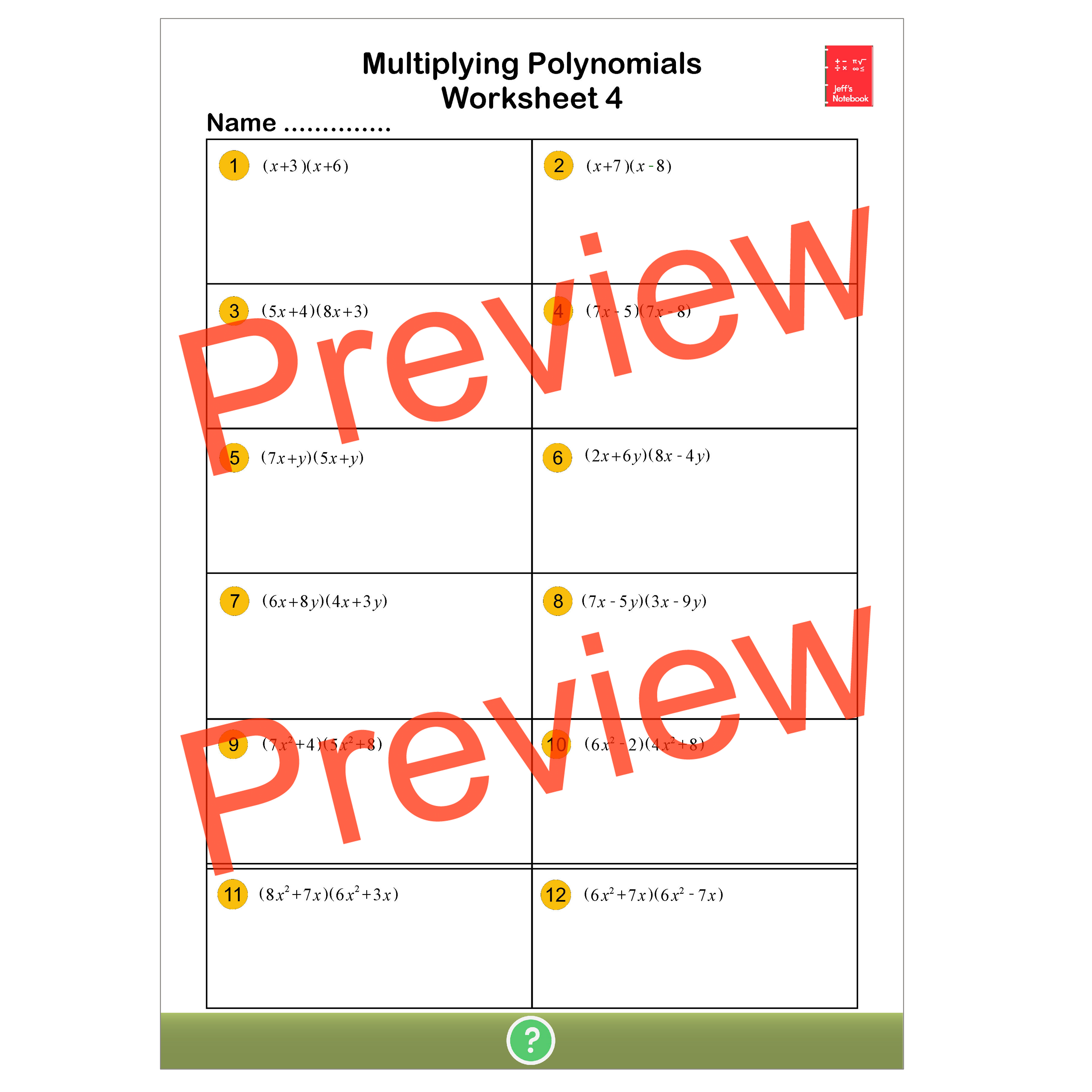
Free practice: multiplying monomials and polynomials.
How to Make the Most of Multiply Polynomials Worksheet Resources
When utilizing multiply polynomials worksheet resources, it's important to consider a few practical aspects. Firstly, ensure that the worksheets are appropriate for the learner's skill level. While challenging material is beneficial, it's essential to start with foundational concepts and gradually increase the difficulty. Secondly, consider the format of the worksheets. Some learners may prefer physical copies that they can write on, while others might find digital versions more convenient, especially if they can easily access them on their devices. Finally, encourage students to approach the worksheets as a learning tool rather than a chore. Provide guidance and feedback, and create a positive learning environment where mistakes are seen as opportunities for growth.
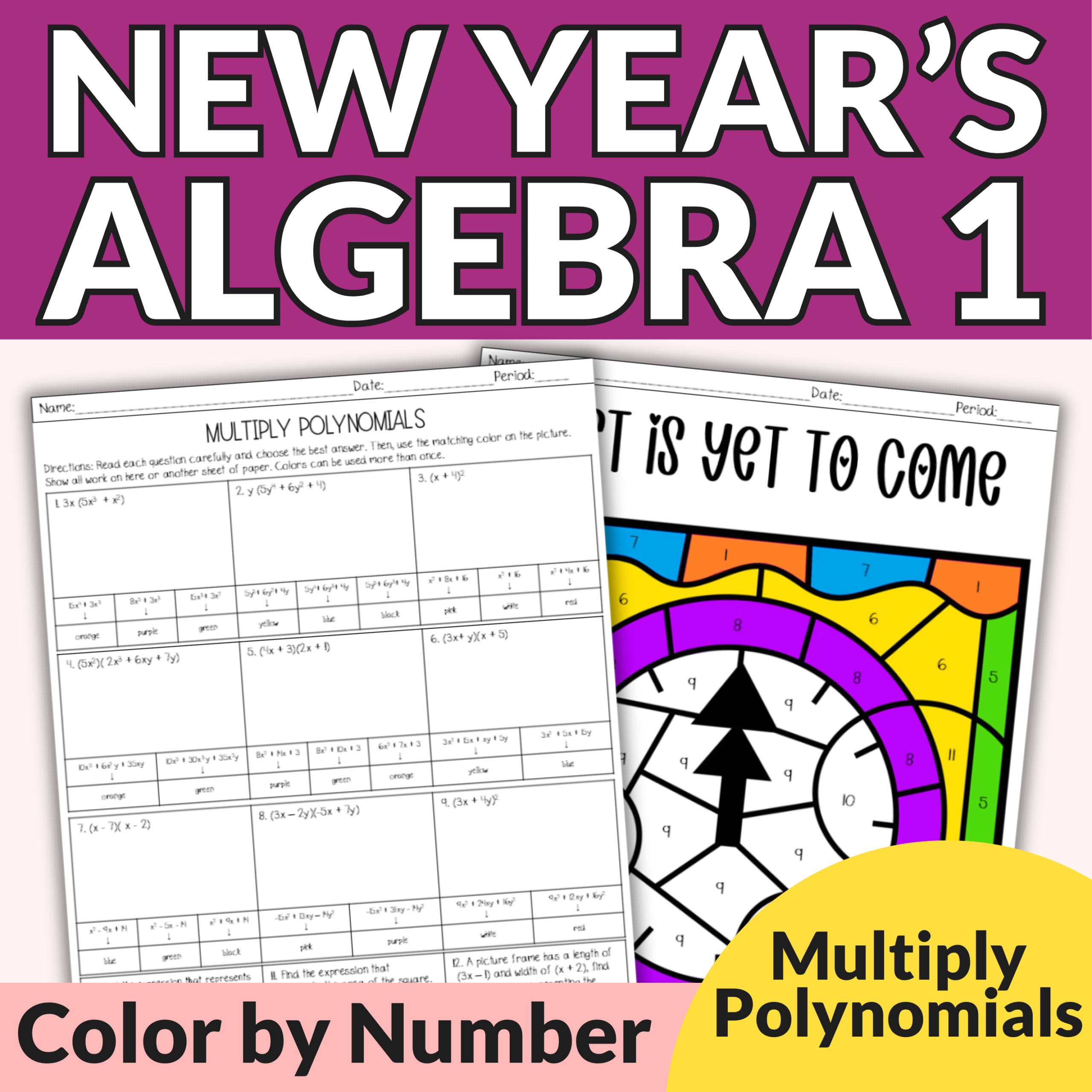
Color by number: multiplying binomials and trinomials.
Practical Application: Incorporating Multiply Polynomials Worksheet into Real-World Scenarios
One of the most effective ways to reinforce mathematical skills is by applying them to real-world scenarios. Multiply polynomials worksheet resources can be a great starting point for exploring practical applications. For instance, teachers or homeschoolers can create story problems that involve polynomial multiplication, such as calculating the area of a garden with irregular dimensions or the volume of a unique-shaped container. This not only reinforces the mathematical skill but also helps students understand the relevance and usefulness of algebra in everyday life. Additionally, these worksheets can be a valuable tool for tutors, providing a structured and engaging way to support students who may be struggling with polynomial multiplication.
Area problems for multiplying polynomials.
As learners progress, multiply polynomials worksheet resources can be tailored to include more complex scenarios, such as multiplying square trinomials or special products. These advanced worksheets can challenge students to apply their knowledge and develop a deeper understanding of polynomial multiplication. With consistent practice and a variety of resources, students can build confidence and proficiency in this essential algebraic skill, setting them up for success in more advanced mathematical concepts.
Algebra tiles: a visual aid for polynomial multiplication.
Answers to polynomial multiplication worksheet 1.
Grids for polynomial multiplication practice.
Simplifying and multiplying polynomials: 7th grade.
Worksheets for multiplying polynomials: a library.
Algebra 1: another choice board for polynomial multiplication.
Hey there, math enthusiasts! We hope this journey into the world of polynomial multiplication has been an enlightening one. Remember, practice makes perfect, and these worksheets are your secret weapon to mastering this skill.
So, why not give it a go? Print out a worksheet, gather your pens and calculators, and dive into the world of polynomial multiplication. It's a fun way to sharpen your algebraic skills, and we'd love to hear about your experiences. Leave a comment below and share your thoughts!
Algebra 1: Polynomial multiplication choice board.
Read also: 29 Stencil Ideas for Hobby Lobby Projects